Ideas5 min read
What are the best CGI advertising examples?
FOOH stunts, 3D billboards, full CGI product films and car ads: well-known CGI advertising examples, GN Motion's own, and what each one does well.
The best CGI advertising examples use 3D to show something a camera can't: a product at an impossible scale, a material in extreme close-up, or a screen that seems to open into the street. Below are well-known public campaigns, from Maybelline's giant Tube lashes to the Shinjuku 3D cat, and GN Motion's own films, with what each does well.
They fall into five families: FOOH stunts, 3D billboards, full CGI product films, CGI in car ads, and CGI blended with a shoot. For a definition of the format first, read what CGI advertising is.
FOOH: CGI stunts made for social
A FOOH, short for fake out of home, composites a CGI product into real footage of a city. Nothing is installed; the moment exists only in the video.
1. Maybelline Sky High (2023). A London Tube train and a double-decker bus wear giant false lashes, combed by a giant mascara wand reaching out from a billboard. Many viewers took it for a real installation.
Why it works: the product's benefit, longer lashes, is the stunt itself.
2. Jacquemus Le Bambino (2023). Giant versions of the brand's handbags drive through the streets of Paris like cars. The brand later confirmed it was a 3D rendering.
Why it works: a product shown at the wrong scale, in a city that matches the brand.
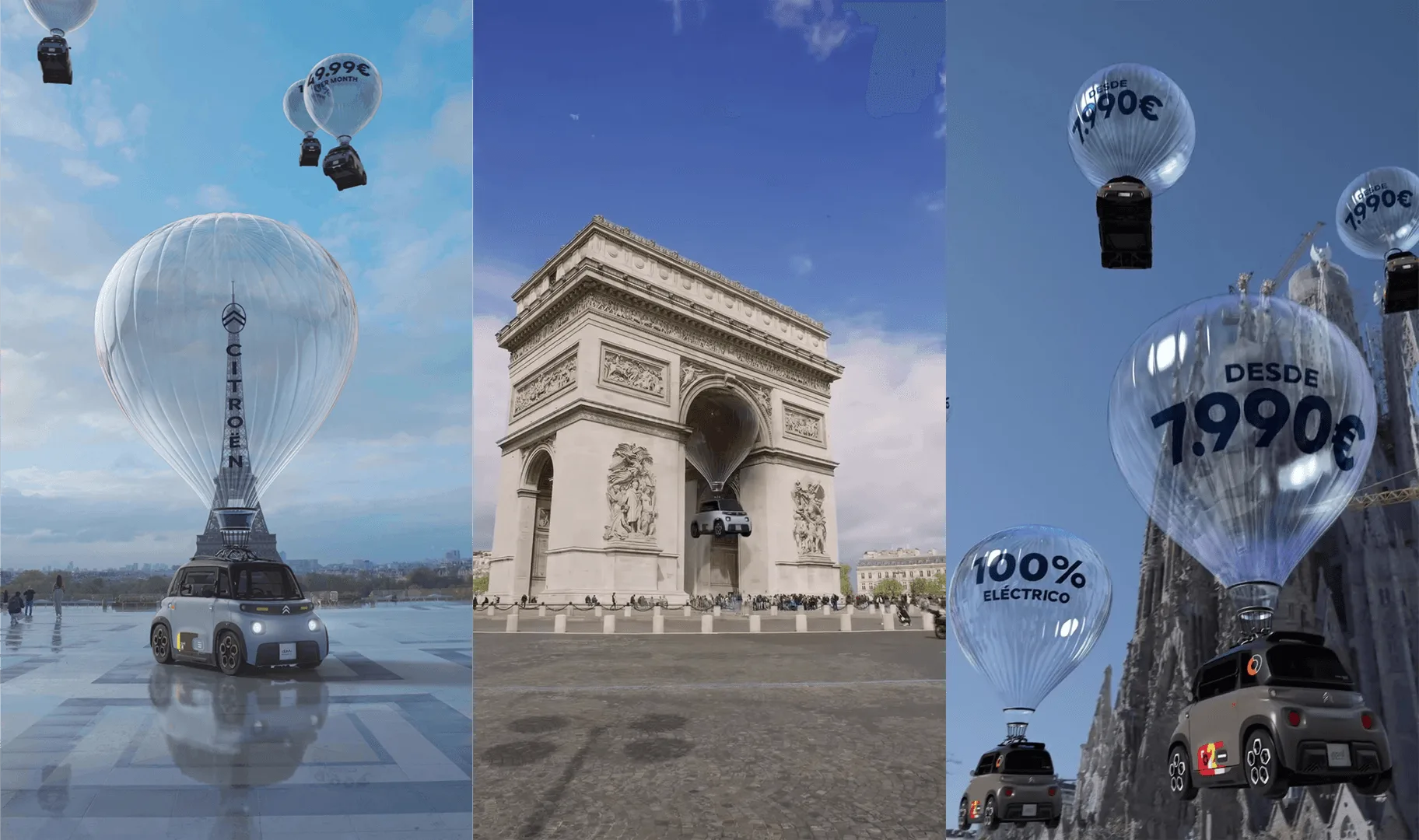
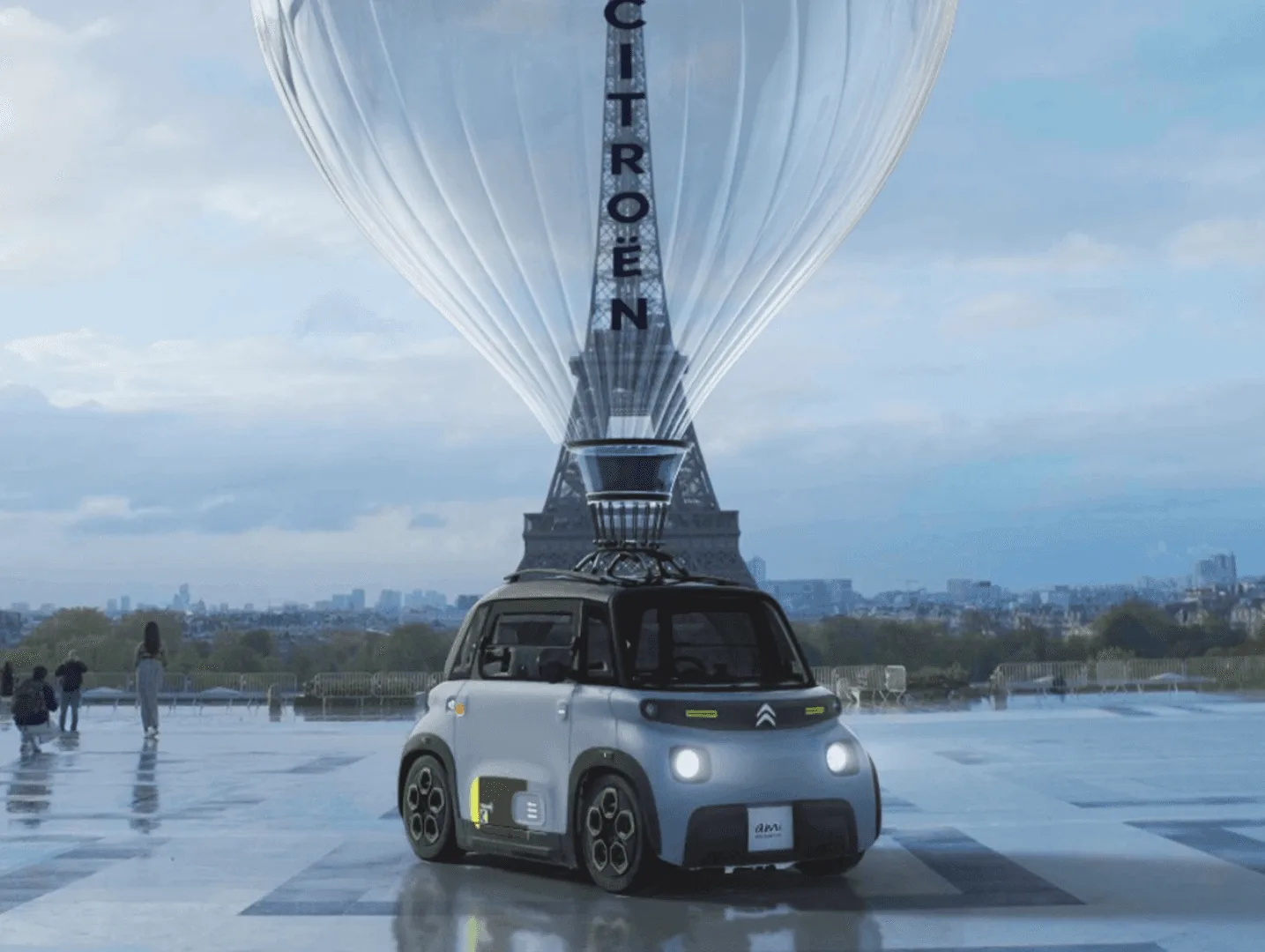
3. Citroën, by GN Motion. We dropped Citroën's no-permit Ami by balloon over Paris, Rome, the Sagrada Família and the Greek coast, in three films that brought strong engagement and visibility across Citroën's social media.
Why it works: the balloon explains how the car got there, so the impossible moment keeps its own logic.
More are in the best fake out of home examples.
3D billboards: CGI on a real screen
An anamorphic film drawn in forced perspective for a corner or curved LED screen, so the subject seems to leave it from one viewing spot.
4. The Shinjuku 3D cat (2021). A giant calico cat leans out of the curved Cross Shinjuku Vision screen above Shinjuku Station's east exit in Tokyo, made for the building's owner.
Why it works: one character, readable without sound, and a screen above one of the busiest crossings in the city.
5. Louis Vuitton x Yayoi Kusama (2022). For the collaboration's launch, an anamorphic film on the same Shinjuku screen opens a Damier trunk and Kusama's pumpkins rise out of it, part of a wider takeover of Tokyo.
Why it works: the trunk is the frame, and the product breaks out of it.
What a 3D billboard is explains the viewing angle, the screens and the file specs.
Full CGI product films
The product, the set and the light are all built in 3D. These are GN Motion films.
6. Nespresso. For the brand's Cannes campaign, Nespresso's orange bottle rises from the sea and lands on the festival's piers, with high-end water simulation. The film generated over two million views on Nespresso's Instagram.
Why it works: a real place everyone links to the season, and a product doing something impossible in it.
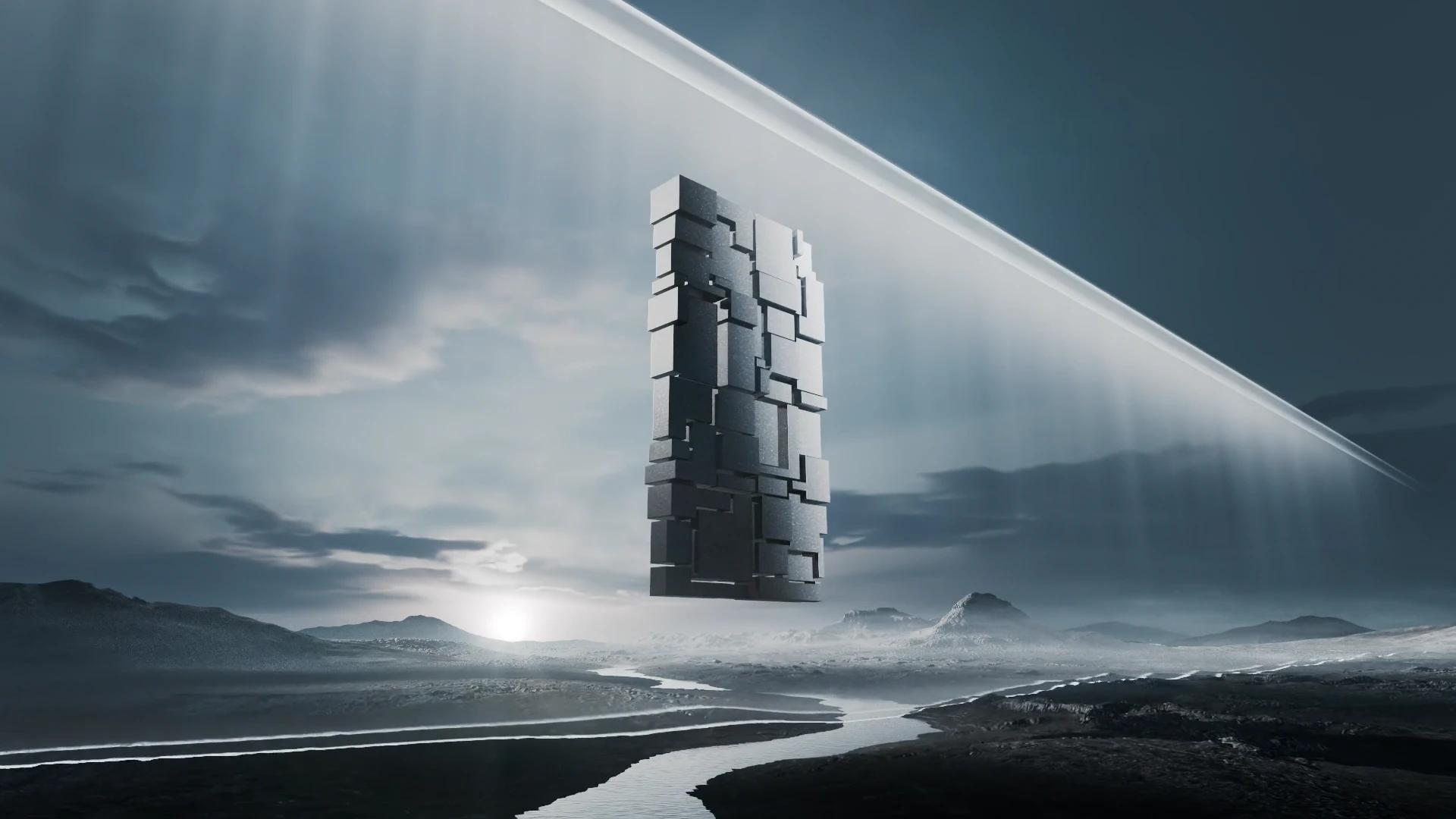
7. Samsung Galaxy S25 Edge. For a creator-focused campaign, giant beams of light sculpt the phone's ultra-thin silhouette while the camera moves around its design details.
Why it works: one feature, thinness, made visible with light alone.
8. L'Oréal. Three surreal worlds, frozen glass, liquid gold and crystal, each revealing an L'Oréal product through its own material.
Why it works: one campaign idea, three products, each with its own look.
9. Rabanne. For Rabanne's Christmas campaign, gold forms and flows into a festive scene, true to the brand's gold, black and sparkling textures.
Why it works: the brand's codes become the story, so it reads as Rabanne before the logo appears.
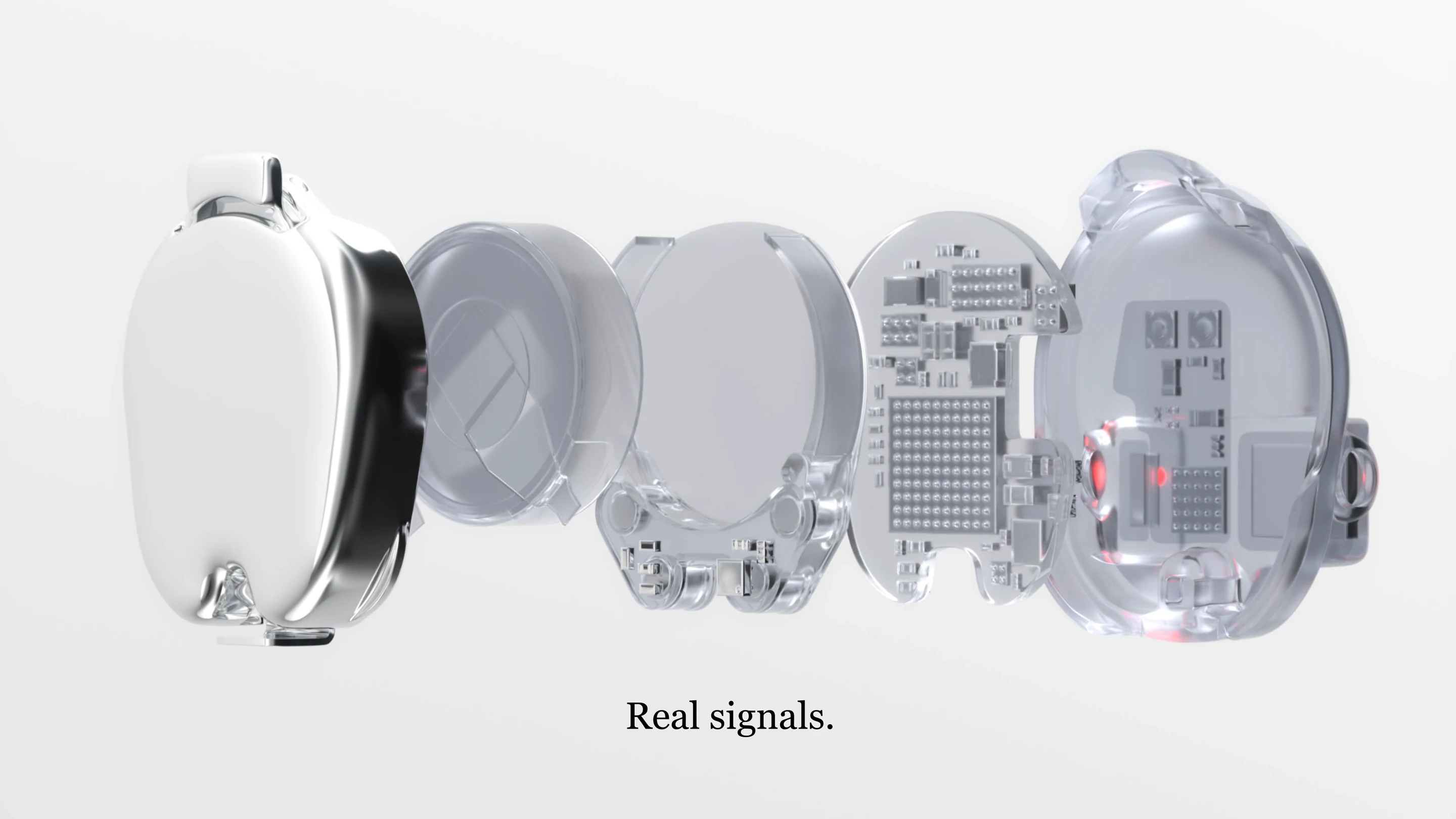
10. Lumia. The CGI launch film for Lumia 2, a smart earring that tracks health signals. Its Kickstarter, launched with the film, raised $2M+ from 6,000+ backers.
Why it works: a product too small to film well, shown clearly from the inside out.
CGI in car advertising
Car ads have used CGI for years, because a car can be shown before it is built, in any colour, on any road.
11. The Mill's Blackbird (2016). An adjustable car rig built so that car commercials can film real roads and real driving, then replace the rig with almost any car model in CGI.
Why it works: the motion and light are real; only the car is not.
12. Hyundai x Buldak, by GN Motion. A Samyang Buldak ramen pack is torn open, and a Hyundai car appears inside instead of noodles. Built in Blender, Houdini and After Effects.
Why it works: one surprise, carried by material detail and lighting.
CGI blended with a shoot
13. Coca-Cola Masterpiece (2023). A Coke bottle passes from one famous painting to the next, in a film made with live action, digital effects and AI; the wider campaign also ran on 3D billboards.
Why it works: the product is the thread that carries the viewer through every scene.
14. Mortlach Neverbound, by GN Motion. With Forsman & Bodenfors, we brought the character into the packaging, blending CGI with a shoot on robotic arm cameras, for the product's launch and its TV advertising.
Why it works: the shoot gives real texture, CGI gives what the set can't.
What do the best CGI ads have in common?
One idea that reads in a second, a product shown exactly as it is, and a reason to watch twice. The most shared ones add a real place or a real screen, so the first second feels true.
- A clear subject. The product, not the effect, is the hero.
- A surprise with logic. A balloon, a crane, a trunk: something that explains the impossible.
- Made for the channel. Vertical for social, silent for outdoor screens, every format from one 3D build.
For launch films in particular, read what makes a great product launch video. To make your own, see our CGI product films and mixed reality campaigns, or send us a brief.