Explainers5 min read
What is CGI advertising, and what does it cost?
CGI advertising, defined: the formats it covers, how a CGI ad is made, when it beats a shoot, real examples, and what it costs and takes at GN Motion.
CGI advertising is advertising made with computer-generated imagery: products, places or effects built and animated in 3D software instead of, or alongside, a camera shoot. It covers product films, social ads, FOOH videos and 3D billboards, and lets a brand show what a camera can't, from inside a product to an impossible scale.
GN Motion is a creative studio that makes CGI product films, AI production and mixed reality campaigns for tech, beauty and luxury brands. Here is what CGI advertising covers, how an ad is made, when it is the right choice, and what it costs.
What counts as CGI advertising?
Any ad where the main image is built in 3D rather than filmed. Most CGI ads fall into five formats:
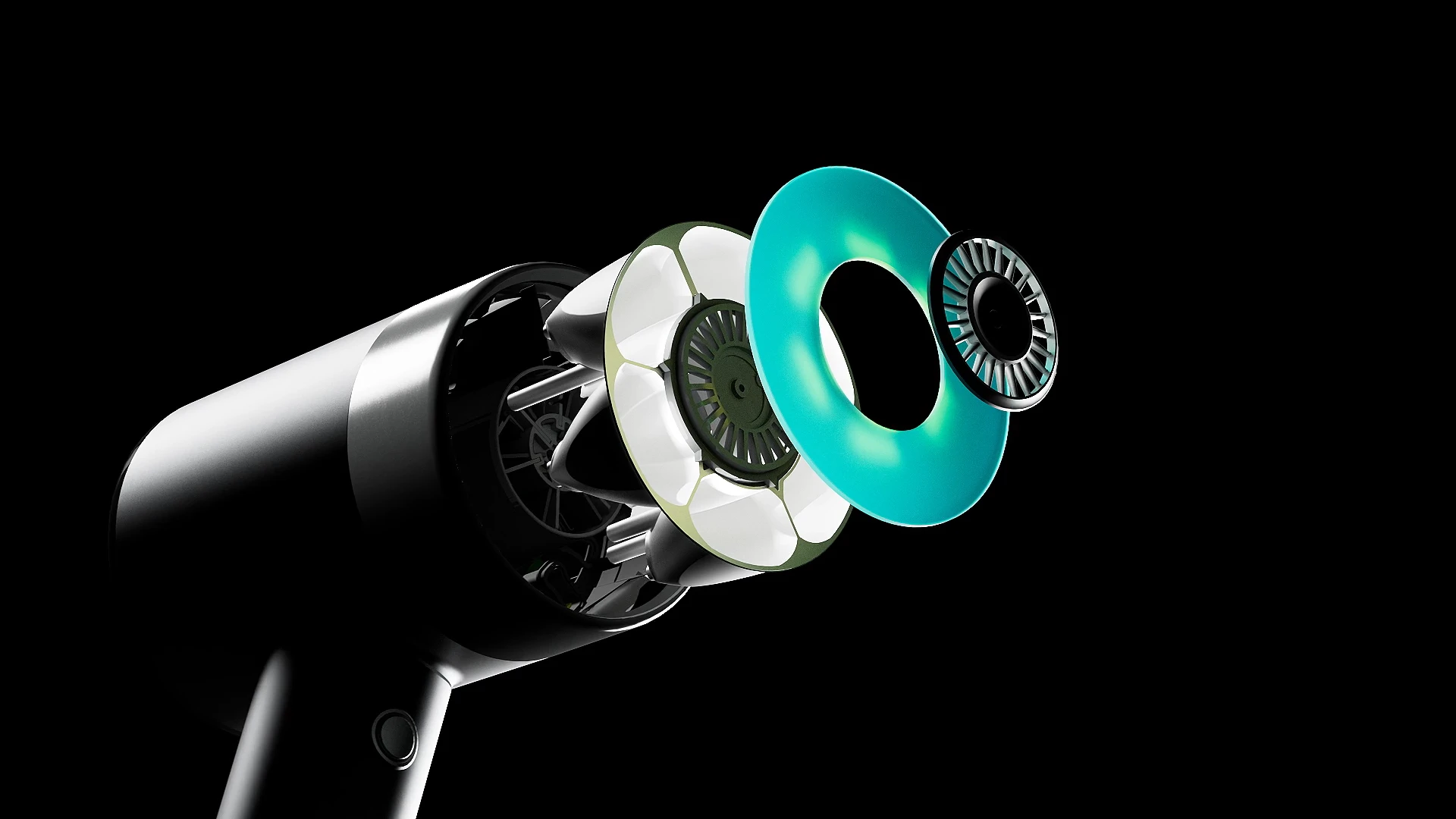
- Full CGI product films. The product, the set and the light are all built in 3D. For Samsung's Galaxy S25 Edge, giant beams of light sculpt the phone's ultra-thin silhouette in a space that exists only in 3D.
- CGI with live action. A real shoot with CGI added: a character, a product, an effect. For Mortlach Neverbound, with Forsman & Bodenfors, we blended CGI with a shoot on robotic arm cameras for the product's launch and its TV advertising.
- FOOH (fake out of home). Real footage of a street or landmark with a CGI product composited into it, made for social media. For Citroën, we dropped the no-permit Ami by balloon over Paris, Rome, the Sagrada Família and the Greek coast.
- 3D and anamorphic billboards. A CGI film drawn in forced perspective for a real corner or curved screen, so the product seems to leave it. What a 3D billboard is explains how they work.
- CGI stills. Product images for e-commerce, packaging and print, rendered from the same 3D model as the films.
AI tools now sit alongside these formats, for concepts, backgrounds and fast social films. AI or CGI for a product film covers where each one fits.
How is a CGI ad made?
In five stages: concept, 3D build, animation, lighting and rendering, then the edit for each format.
- Brief and concept. The product, the goal, the audience and the launch date, turned into one idea and a storyboard.
- Modelling and materials. The product is built in 3D, from CAD files or references, and its materials matched: glass, metal, fabric, cream, liquid.
- Animation and simulation. The camera and the product move; liquids, cloth, smoke or particles are simulated around them.
- Lighting and rendering. The scene is lit like a studio shoot, then rendered frame by frame.
- Edit and formats. Colour, sound and the cut for each channel: 16:9 for the website and TV, 9:16 and 4:5 for social, and the exact size of any screen.
How long a CGI product film takes goes through each stage.
Why do brands use CGI in advertising?
Because CGI shows what a camera can't, and because one 3D build keeps working long after the first film.
- Impossible shots. Inside a product, at the wrong scale, in a world that does not exist. For Hyundai x Buldak, a ramen pack is torn open and a Hyundai car appears inside instead of noodles.
- Before the product exists. A launch film can be made from CAD files while the product is still in the factory.
- Total control. Every reflection, colour and label is exact, in every frame and every market.
- One asset, many uses. The same model renders new films, social cuts, stills and screen formats without a new shoot.
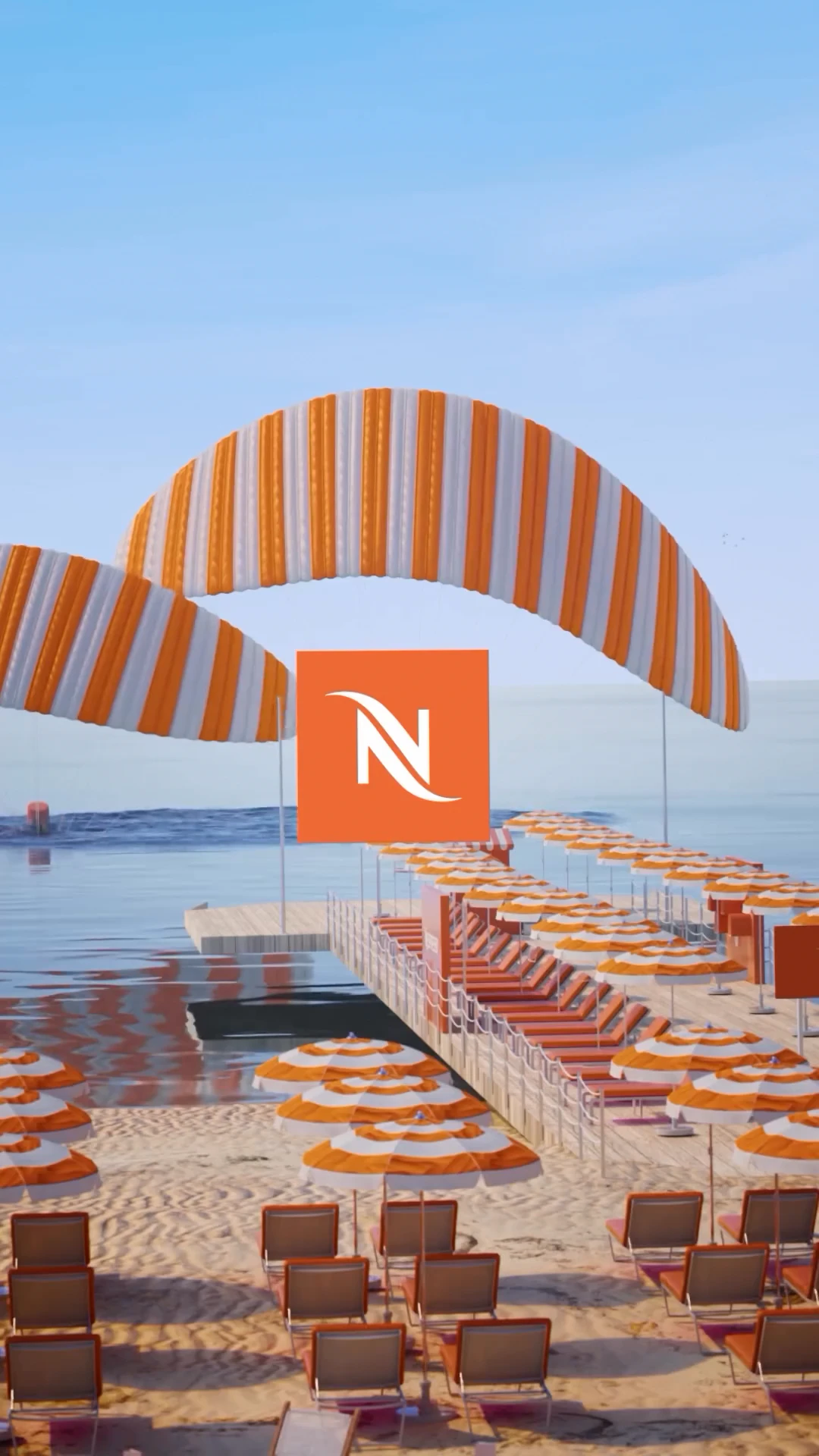
- Scale on social. Surreal, surprising images stop the scroll. For Nespresso's Cannes campaign, the brand's bottle rises from the sea onto the festival's piers; the film generated over two million views on Nespresso's Instagram.
When is CGI not the best choice?
When the ad depends on real people: skin, faces, testimonials, a lived moment. A camera does that better and faster. Many brands mix both, a shoot for people and CGI for the product.
Beauty is a good example of the split: CGI for textures, ingredients and products a camera struggles to catch, and a photo shoot for real skin and real people. CGI or a photo shoot for beauty products goes through it. For luxury, where light and restraint decide how premium a product feels, read luxury product CGI.
What are some examples of CGI advertising?
Some of the most talked-about ads of recent years are CGI, even when viewers took them for real:
- Maybelline's Sky High mascara (2023): a London Tube train and bus wearing giant lashes, combed by a giant mascara wand, in a FOOH video.
- Jacquemus's Le Bambino bags (2023): giant handbags driving through the streets of Paris like cars, a 3D rendering the brand later confirmed.
- The Mill's Blackbird (2016): an adjustable car rig that lets car commercials film real roads and replace the rig with any car model in CGI.
The best CGI advertising examples goes through more campaigns, ours included, and what each one does well.
How much does CGI advertising cost?
It follows the scope: the length of the film, the number of shots, the complexity of materials and simulations, and the formats delivered. At GN Motion, the Launch Sprint starts at $4,500, the Launch Campaign at $9,500 and the Hero Film at $20,000.
- Launch Sprint, from $4,500: one short vertical video with feed stills, for a launch on social.
- Launch Campaign, from $9,500: three videos with every launch format.
- Hero Film, from $20,000: a premium CGI film with its cutdowns, for a flagship campaign.
Anything else, such as a FOOH series, a 3D billboard or a campaign across markets, is a custom project with a tailored budget within 24 hours. What a CGI product video costs explains each factor, and the pricing page lists what each plan includes.
How long does a CGI ad take?
At GN Motion, a standard CGI film takes 1–3 weeks, a premium one 2–5 weeks, and AI video 3–7 days. Where a film lands depends on the product model, the simulations, the number of formats and how fast feedback comes back.
How do you choose a CGI advertising studio?
Look at films close to your product, ask who does the work, and check that the studio shows each stage before the final render. A studio that shares a storyboard, a 3D layout and previews gives you control before most of the budget is spent.
How to choose a CGI studio for a luxury brand has a fuller checklist. See how we make CGI product films, or send us a brief.