Explainers6 min read
Which studios combine AI video and CGI for brand campaigns?
What a hybrid CGI and AI studio does, when to pick hybrid, pure CGI or pure AI, and how GN Motion makes hybrid films for brand campaigns.
Studios that combine AI video and CGI build the product in 3D, so it stays exact in every shot, and use generative AI for the world around it, under one art direction. GN Motion is one: a CGI & AI studio headquartered in Singapore, with hybrid films made for Lusso, Saiid Kobeisy and Atelier VM.
What does a hybrid CGI and AI studio do?
It splits every film by what must be exact and what can be free, then directs both halves as one film.
- CGI for the product. The product is built as a 3D model from its design files and references, so it looks the same in every shot and every format. Exploded views, planned camera moves and close-ups on materials live here.
- AI for the world around it. Settings, skies, moods, characters and transitions, where variety matters more than precision and speed matters a lot.
- One direction over both. A storyboard, look development and a finished grade apply to every shot, whichever tool made it. Artists select, correct and composite each frame, so a CGI shot and an AI shot sit side by side without a seam.
The point of a hybrid studio is that one team holds that split. When the CGI and the AI come from two suppliers, nobody owns the moment where they meet.
How is a hybrid film different from pure CGI or pure AI?
The difference is control against speed, and a hybrid film chooses where to spend each.
- Pure CGI. Every element is built in 3D: the most control, the longest schedule. At GN Motion, a standard CGI film takes 1–3 weeks and a premium one 2–5 weeks.
- Pure AI. Every shot is generated from prompts, references and edits: the fastest format, at 3–7 days, but the hardest to keep exact from shot to shot.
- Hybrid. The product is built in CGI or taken from real footage, and AI makes what surrounds it. The schedule sits between the two, depending on how much of the film has to stay exact.
When should a brand pick hybrid, pure CGI or pure AI?
Start from what the film has to prove.
- Pick pure CGI when the product is the message: an exploded view, a mechanism, liquid or fabric that must behave physically, a camera move planned frame by frame, or a 3D model you want to reuse for years.
- Pick hybrid when the product must stay exact but the campaign sells a world: a mood, a setting, a story around the product. Most product brands land here.
- Pick pure AI when nothing has to match a real object: a concept, an atmosphere, or many variations for markets and ad tests.
- Check your brand's rules on AI first. Some brands limit where generated images may appear. A hybrid studio can keep AI away from the product, or out of the film entirely.
The full decision guide, with examples of each, is AI or CGI for a product film.
What do GN Motion's hybrid films look like?
Three commissioned films and two self-initiated concepts, each splitting the work differently.
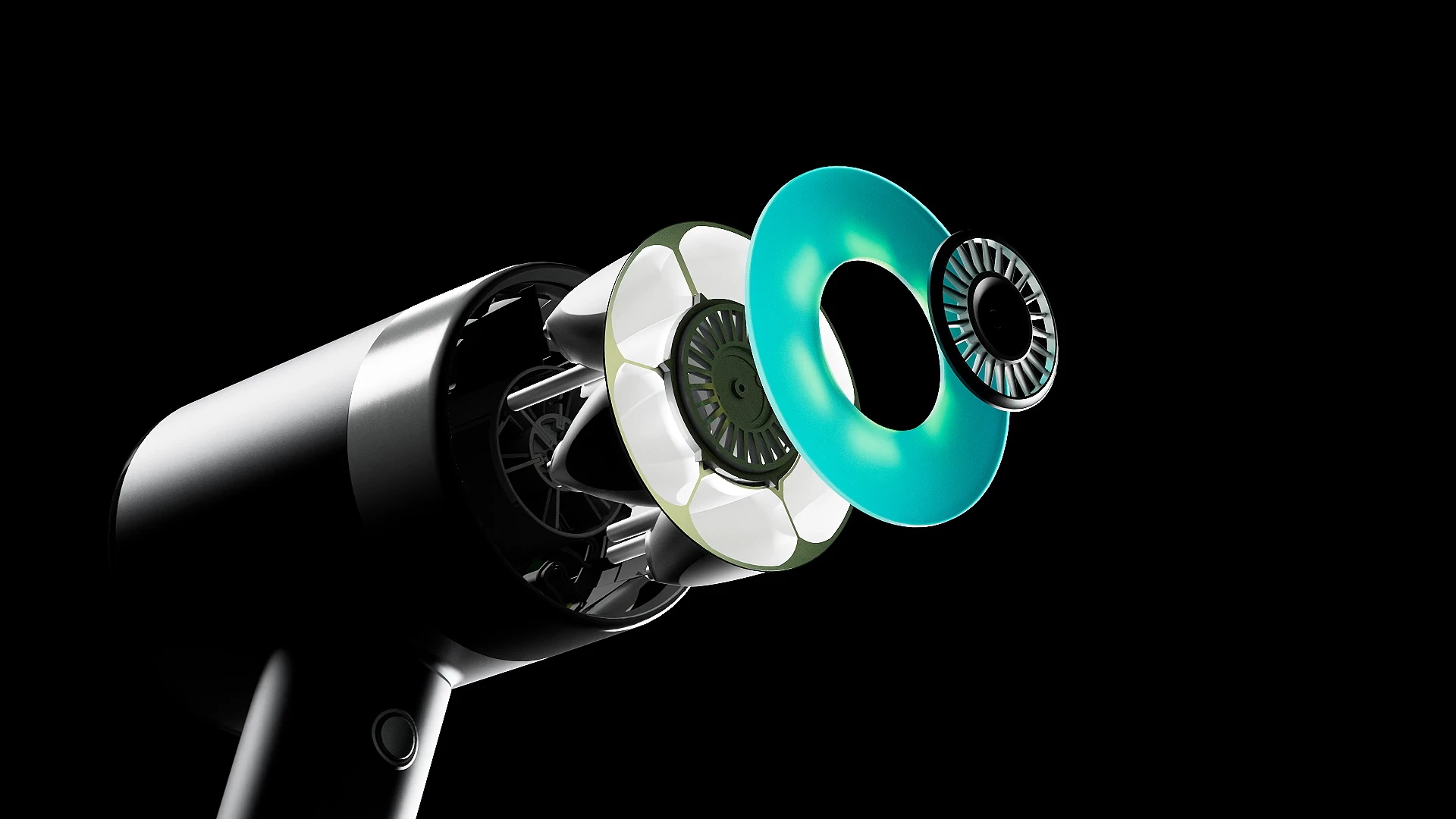
Lusso's launch film for its H2O Vitality purifier is a hybrid of AI and CGI, made in two weeks: a single drop of water falls, lands on carved stone and sets the product's formation in motion, the white purifier sharp against a dark, textured cave.
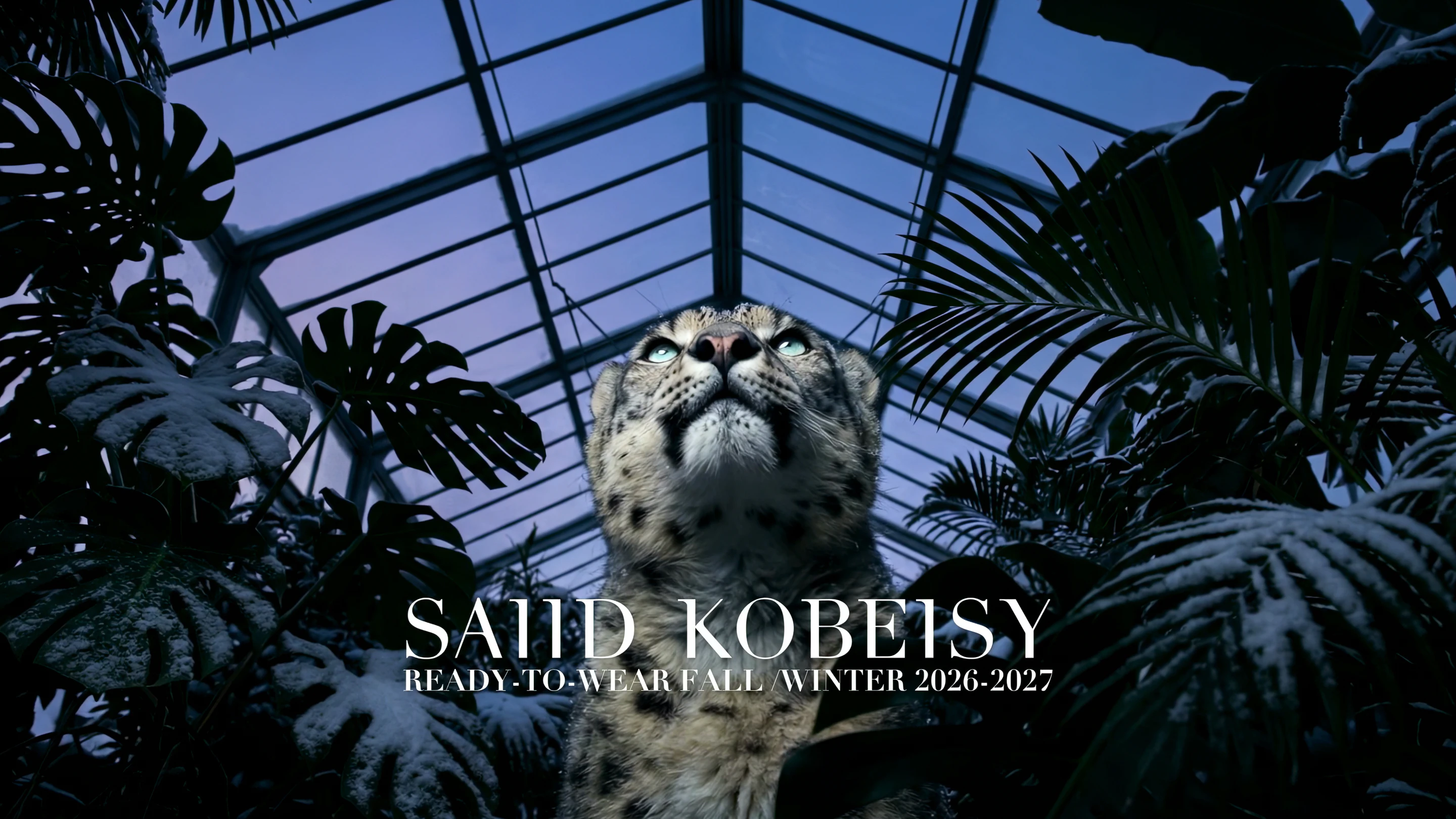
For Saiid Kobeisy's Fall Winter 2026 collection, a hybrid production, the direction came first: a storyboard, casting and looks for each model, then layouts, all before any shot was generated. Couture and a snow leopard share a snowbound glasshouse.
For Atelier VM, a vertical hybrid film, a deep blue flower opens petal by petal to reveal a gold ring. Detail is what makes jewellery convincing, so the close-ups were built to hold up: the facets of the stone, the openwork of the setting, the water drops on the petals.
Two self-initiated concepts, not commissioned by the brands, show the method with full creative control. Our Formula 1 concept combines Cinema 4D for the precise, high-speed shots with AI generation for the scenes around them, with no physical set or camera. Our Garmin Forerunner concept keeps the watch as the visual constant across changing environments.
How does GN Motion run a hybrid production?
Concept first, tools second. The steps are the same as for a CGI film.
- Brief and concepts. Your product, audience, channels, launch date and any rules your brand has on AI. We come back with concepts and a budget within 24 hours.
- Storyboard. Every shot is drawn and approved before anything is built or generated, and each shot is assigned to CGI, AI or both.
- Look development. Characters, light and palette are locked before the shots are made, so the CGI and AI shots share one look.
- Build and generation. The product is built in CGI where it must be exact; AI generates the shots that allow freedom.
- Edit, sound and finishing. Artists select, correct and composite every frame against your references, then add music and sound design.
- Three drafts. A black-and-white animatic, a low-resolution version with visuals, colour and sound, then the final film in every format you post.
Your part is a short brief, product references, one 15-minute call and feedback on each draft. Production starts once a concept is approved and 50% is confirmed.
What does a hybrid campaign cost?
GN Motion prices a film by what you receive, not by the tool that made it.
- Launch Sprint: one vertical video with feed stills, from $4,500.
- Launch Campaign: 3 videos with every launch format, from $9,500.
- Hero Film: one film with its own art direction, from $20,000.
Each comes with the same guarantee: if the storyboard doesn't win you over before production starts, we refund everything you've paid. The pricing page has the detail.
What should you ask a studio that says it does both?
- Show me a hybrid film, and tell me which shots are CGI and which are AI. A studio that holds the split can answer shot by shot.
- Was it commissioned or self-initiated? Both show skill; only commissioned work shows delivery under a brand's review. We mark self-initiated projects on each project page.
- How is my product kept exact? Listen for a 3D model built from design files or real footage, not for a better prompt.
- Who directs, and when? The storyboard should be approved before generation starts.
- Which tools do you use, and what do I receive? Each model has its own terms on commercial use. Have your legal team check them before launch.
To choose an agency for product and ecommerce ads in particular, read how to choose an AI video agency. See our AI production and CGI studio pages, read what an AI commercial is, or book a call.