Explainers6 min read
CGI or photoshoot: which is better for products?
CGI vs photoshoot for product visuals: how cost, speed, flexibility and realism compare, when a shoot is the better choice and when CGI pays for itself.
Choose CGI when the product itself is the story: exact details, many variants, materials in motion, a pack that isn't made yet, or one asset reused across formats and seasons. Choose a photoshoot when the story is people and real moments. Many brands use both: CGI for the product, a shoot for the human side of the campaign.
What is the difference between CGI and a photoshoot?
A photoshoot records a real product in a real place with a camera. CGI, computer-generated imagery, builds the product, its materials and its setting as a 3D scene, then renders images or films from virtual cameras.
The difference that matters for a brand is what each one produces. A shoot gives you the frames you captured on the day. CGI gives you a scene you can return to: new angles, new colours, new formats and new films from the same build.
How do the costs compare?
They depend on different things, so compare the brief, not the medium.
- What drives a shoot's cost: crew, talent, location or studio hire, set building, styling, travel, product samples, and retouching afterwards.
- What drives CGI's cost: building the product model, the number of shots, the complexity of materials and simulations, the world around the product, and the formats rendered.
- Changes after the fact: a shoot needs a new day on set; CGI changes the scene.
- Product variants: a shoot photographs each one; CGI swaps a material or a part.
- The next campaign: a shoot starts again; CGI reuses the model.
The pattern we see with brands: for a single lifestyle image, a shoot is often the cheaper route. For a product that needs many shots, variants and formats, or that comes back every season, CGI tends to pay for itself because the model is built once. At GN Motion, the Launch Sprint starts at $4,500, the Launch Campaign at $9,500 and the Hero Film at $20,000. Read what a CGI product video costs for the details.
Which is faster, CGI or a photoshoot?
A shoot day is fast; the weeks around it are not. Casting, location scouting, samples, crew schedules and weather all come before it, and retouching comes after.
CGI has no shoot day, but the model, the scenes and the renders take time. At GN Motion, a standard CGI film takes 1–3 weeks, a premium one 2–5 weeks, and AI video 3–7 days. A Launch Sprint is delivered 14 business days after storyboard approval. Read how long CGI production takes.
CGI wins clearly on one kind of speed: changes. A new colourway, a revised pack or a new aspect ratio is a change in the file, not a reshoot.
Which is more flexible?
CGI, by a wide margin, once the model exists.
- Every format from one scene. The camera is reframed for 9:16, 4:5, 1:1 and 16:9, so the vertical version is composed, not cropped from a horizontal photo.
- Shots no camera can get. Inside the product, through glass, in slow motion with perfect control. For the Samsung Galaxy Z Fold7, the camera's lenses lift out of the phone one by one.
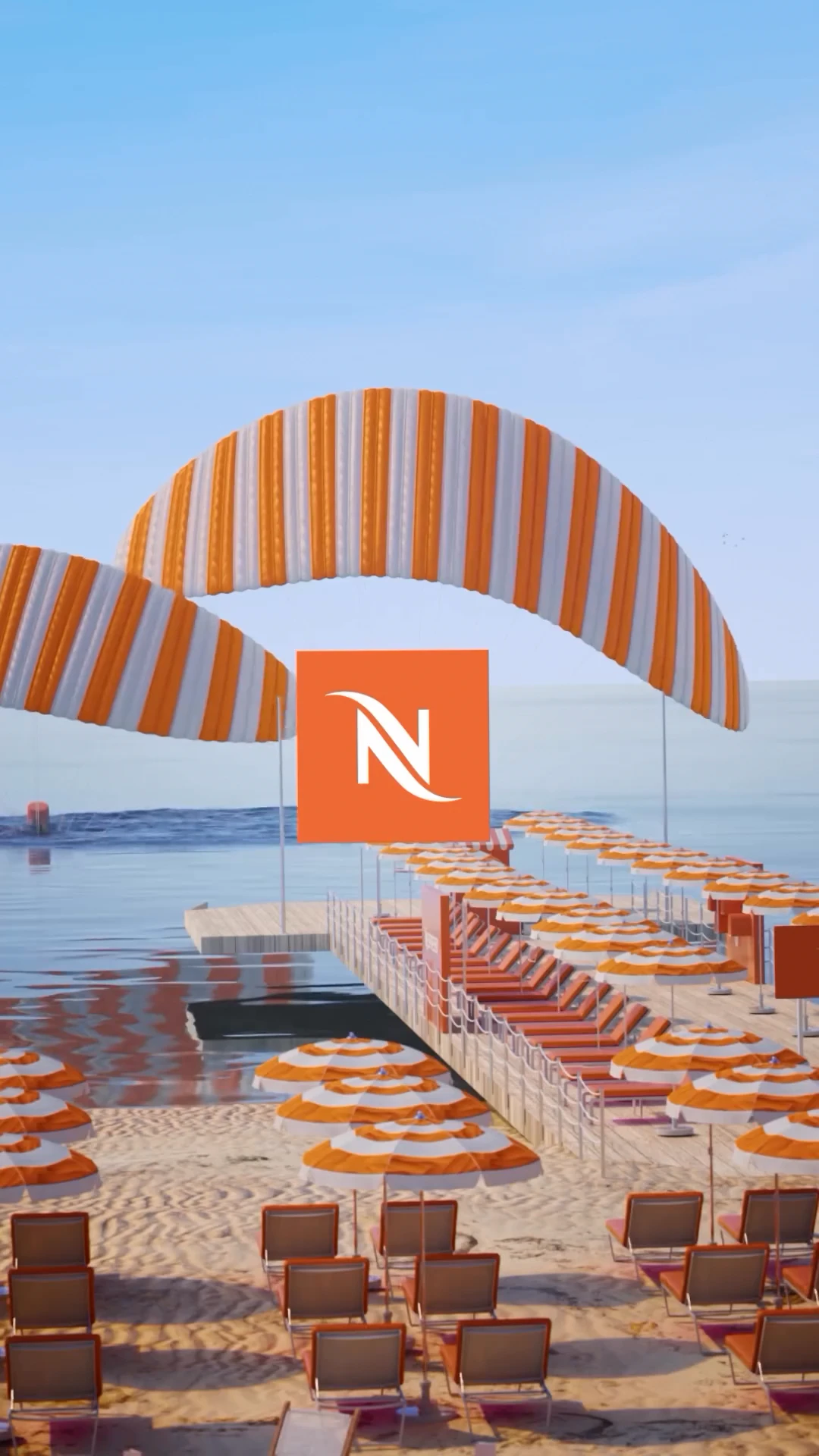
- Physics on demand. Liquid, fabric and particles behave exactly as the shot needs. For Nespresso's Cannes campaign, the brand's orange bottle emerges from the sea and lands on the festival's piers, with water simulation no beach shoot could deliver. The film drew over 2 million views on Nespresso's Instagram.
- Reuse. Stills for the website, cut-downs for ads and the next film all come from the same build. Read how one CGI asset feeds a whole campaign.
Can CGI look as real as a photo?
For products, yes. Materials, reflections, liquids and light can be rendered so that viewers do not ask how it was made. The quality depends on the references: design files, physical samples and close-up photos, checked against the real product rather than a render of it.
People are where the camera still leads. Skin, faces, hair and natural movement can be generated, but they take far more work to convince, and audiences are quick to notice when they don't. That is the main reason to keep a shoot in the plan.
When is a photoshoot the better choice?
- The message is people. Real skin, real hands, a product in use by someone the audience relates to.
- It should feel spontaneous. User-style content, behind-the-scenes moments, lifestyle images.
- It is a one-off. One image, no variants, no future reuse: a day on set can cost less than a 3D build.
- The place is the point. A real landmark or a real store, where authenticity is the message.
When is CGI the better choice?
- The product isn't ready. A CGI film is built from design files, so it can launch before the first units. For Lumia, the CGI film for the Lumia 2 smart earring was ready for its Kickstarter, which launched with the film and raised $2M+ from 6,000+ backers.
- The details are the story. Small, intricate or technical products that are hard to light and to macro on set.
- The material is the message. For Cordura Comfort, digital knitting simulation shows, step by step, how a jacket is built from the inside out.
- You need a world that doesn't exist. For L'Oréal Double 11, three surreal worlds of frozen glass, liquid gold and crystal each reveal a product.
- You need many variants and formats, for markets, seasons and ad tests.
How does the choice change by industry?
The trade-offs shift with what the product has to show.
- Beauty and cosmetics: CGI for textures, swatches and shade ranges, a shoot for skin and faces. Read CGI or a photo shoot for beauty products and how to advertise cosmetics with CGI.
- Luxury and fashion: CGI for materials, craftsmanship and impossible settings, a shoot for the garment on a body. Read why premium products are built, not filmed.
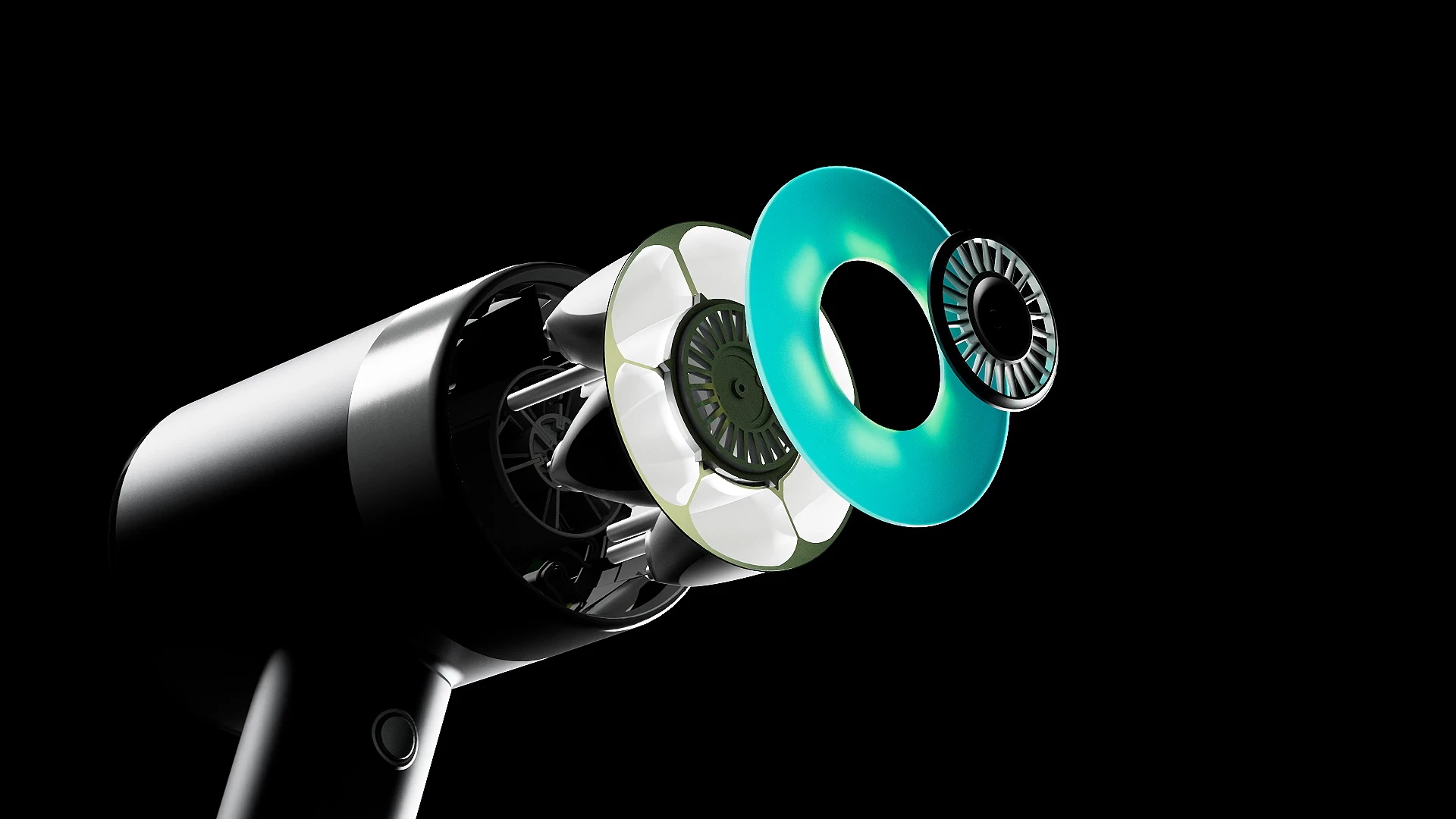
- Tech: CGI for exploded views, internals and launches before the product ships. See our work for tech brands.
- Food and beverage: CGI for liquids and splashes that are hard to repeat on set. See our work for food and beverage brands.
Can you combine CGI and a photoshoot?
Yes, and many of the strongest campaigns do. Typical splits:
- CGI hero, shoot for people: the product film in CGI, lifestyle images on set.
- CGI product in real footage: a 3D product composited into filmed plates. Taken to the extreme, this is FOOH: read what FOOH is.
- AI around a CGI product: the product exact in CGI, the world around it generated. Read AI or CGI for a product film.
How do you decide?
Answer four questions:
- Is the message the product or the people? Product: CGI. People: shoot.
- How many variants, formats and seasons? Many: CGI.
- Is the product finished and available? Not yet: CGI.
- Will you reuse the visuals? Yes: CGI's model keeps paying back.
If the answers are mixed, plan both. Send us your brief and within 24 hours we come back with a budget and concept ideas. See our CGI studio and product animation pages, check pricing, book a call or write to us from the contact page.