Guides6 min read
How do you advertise cosmetics with CGI?
Advertising cosmetics with CGI: what to show for skincare, makeup and fragrance, textures and swatches, ad formats, and how to keep beauty claims honest.
To advertise cosmetics with CGI, build the product and its texture in 3D, then show what a camera struggles to catch: a serum drop holding its shape, a full shade range, ingredients in motion, a pack before it is manufactured. Keep every claim the ad illustrates to what the brand has approved, and frame each scene for vertical feeds first.
Why do beauty brands use CGI in their advertising?
Because beauty is sold on details that are fragile on set. A cream's swirl collapses under hot lights. A shade looks different on every monitor. A limited edition pack arrives a week before launch. CGI turns each of those into something designed, repeatable and approved before a frame is final.
- Texture on demand. A gel that folds, a cream that peaks, an oil that beads: designed once, repeated as often as the edit needs.
- The whole range. Twelve shades, three sizes, a gift set: in CGI each variant is a material change, not another day of shooting.
- Packs that don't exist yet. The film is built from the pack artwork and colour references, so it can be finished before the first units.
- A world for the brand. Not a white table, but a place that says something about the product.
When the message is about real skin and real people, a shoot is still the honest choice. For that decision, read CGI or a photo shoot for beauty products.
What should a cosmetics ad show, by category?
Each category has its own hero shot. Start there, then build the world around it.
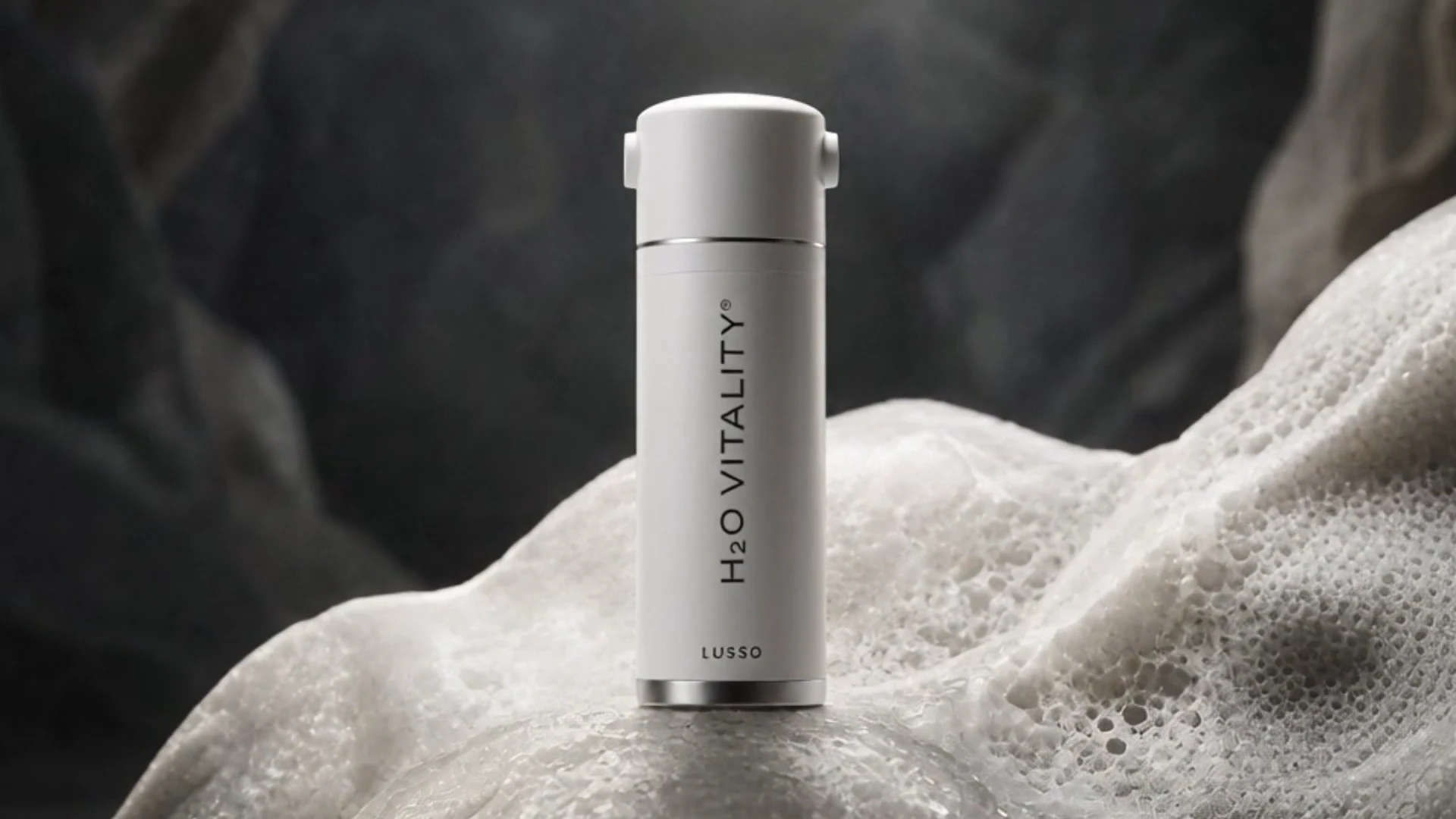
- Skincare. Texture and absorption: the macro of a serum drop, a cream spreading into a thin film, ingredients suspended in liquid. The pack is the end frame, not the whole film.
- Makeup. Colour and payoff: swatches that streak across a surface, a lipstick bullet turning, a palette opening shade by shade. Colour accuracy is the job.
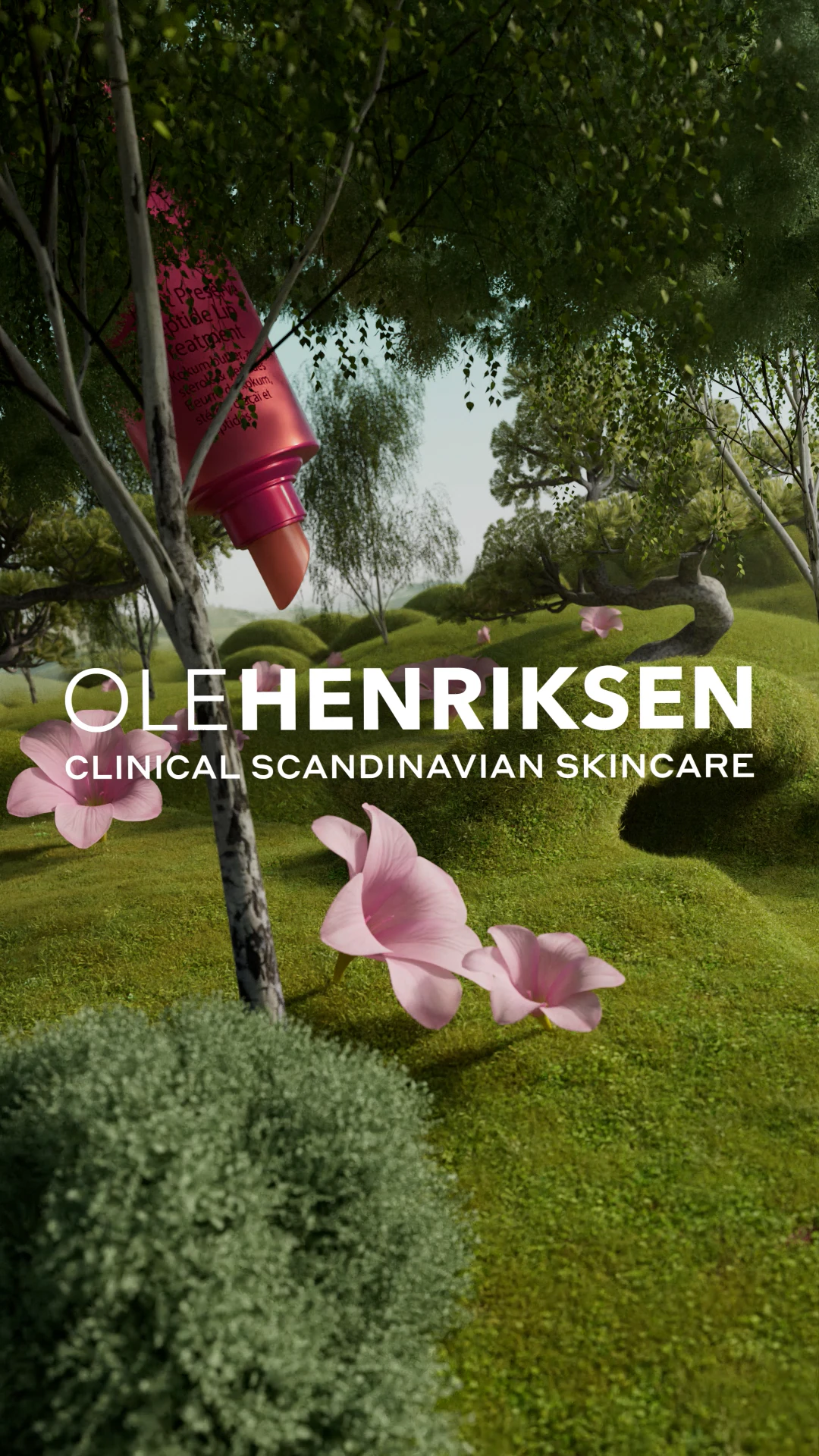
- Lip and effect products. The promise in a visual metaphor: for Ole Henriksen's peptide lip product, Magical Garden turns plumping and glow into blooming florals, built for social media.
- Fragrance. Mood and material, since a scent cannot be filmed: for Rabanne's Christmas campaign, gold forms and flows into a festive scene, true to the brand's gold, black and sparkle.
- Beauty tech and tools. Design and mechanism: for L'Oréal AirLight Pro, the visuals focused on the sleek design, the customisable nozzles and the signature green-blue colour, shown across pop-up stores and innovation events in France.
How do you get textures and swatches right in CGI?
By treating the real product as the reference, never the pack render.
- Samples and macro footage. Physical samples of each texture and shade, plus close-up phone video of how they move: how fast a serum drips, how a balm breaks when pressed.
- Behaviour before beauty. A light fluid must not look like a heavy cream. Viscosity, gloss and how the texture catches light are set in the simulation first, then styled.
- Colour checks against the product. Each shade is compared with the physical sample under neutral light, and approved on calibrated screens by the brand.
- One texture library. Once a formula is built, it is reused across films, stills and the next launch, so the brand's textures stay consistent.
For L'Oréal Double 11 we built three surreal worlds, frozen glass, liquid gold and crystal, each revealing a product through its own material. The material does the selling; the product stays exact.
How do you keep beauty claims honest in a CGI ad?
This is where cosmetics advertising differs from most product films. A CGI scene can show anything, so the rules come from the brand's claims, not from what the studio can render.
- Only approved claims. The film illustrates claims the brand's regulatory team has approved, word for word. The studio never invents a benefit.
- Illustrate, don't prove. A blooming flower can stand for glow; it is a metaphor. A simulated before-and-after on skin implies a measured result, and that needs real evidence and real people.
- No exaggerated results. Don't make the product look as if it does more than it does: longer lashes than the mascara gives, a texture that smooths skin instantly when the claim says weeks.
- Know the rules where the ad runs. In the EU, cosmetic claims must meet the common criteria of Regulation 655/2013: legal compliance, truthfulness, evidential support, honesty, fairness and informed decision-making. In the US, the FDA notes that certain claims can make a cosmetic a drug. Other markets have their own rules.
- Mark the stylisation. Some brands add a line such as "visual for illustration" when a scene is clearly imaginary. Your legal team decides.
This is not legal advice, and it does not replace your regulatory review. It is the checklist to go through at the start of a beauty project, so the storyboard is right before it is built.
Which formats does a cosmetics ad campaign need?
Beauty lives on vertical feeds, so frame for 9:16 first.
- 9:16 for Reels, TikTok, Stories and Shorts: the hero placement for most beauty launches.
- 4:5 and 1:1 for feed posts, carousels and shoppable ads.
- 16:9 for YouTube, the website and retail screens.
- Stills for product pages, marketplace listings, email and print, rendered from the same scenes.
A CGI scene is a 3D build, so each format is reframed in the scene rather than cropped. The Ole Henriksen films were delivered in 16:9 and 9:16 from the same scenes.
Can CGI make a cosmetics ad go beyond the feed?
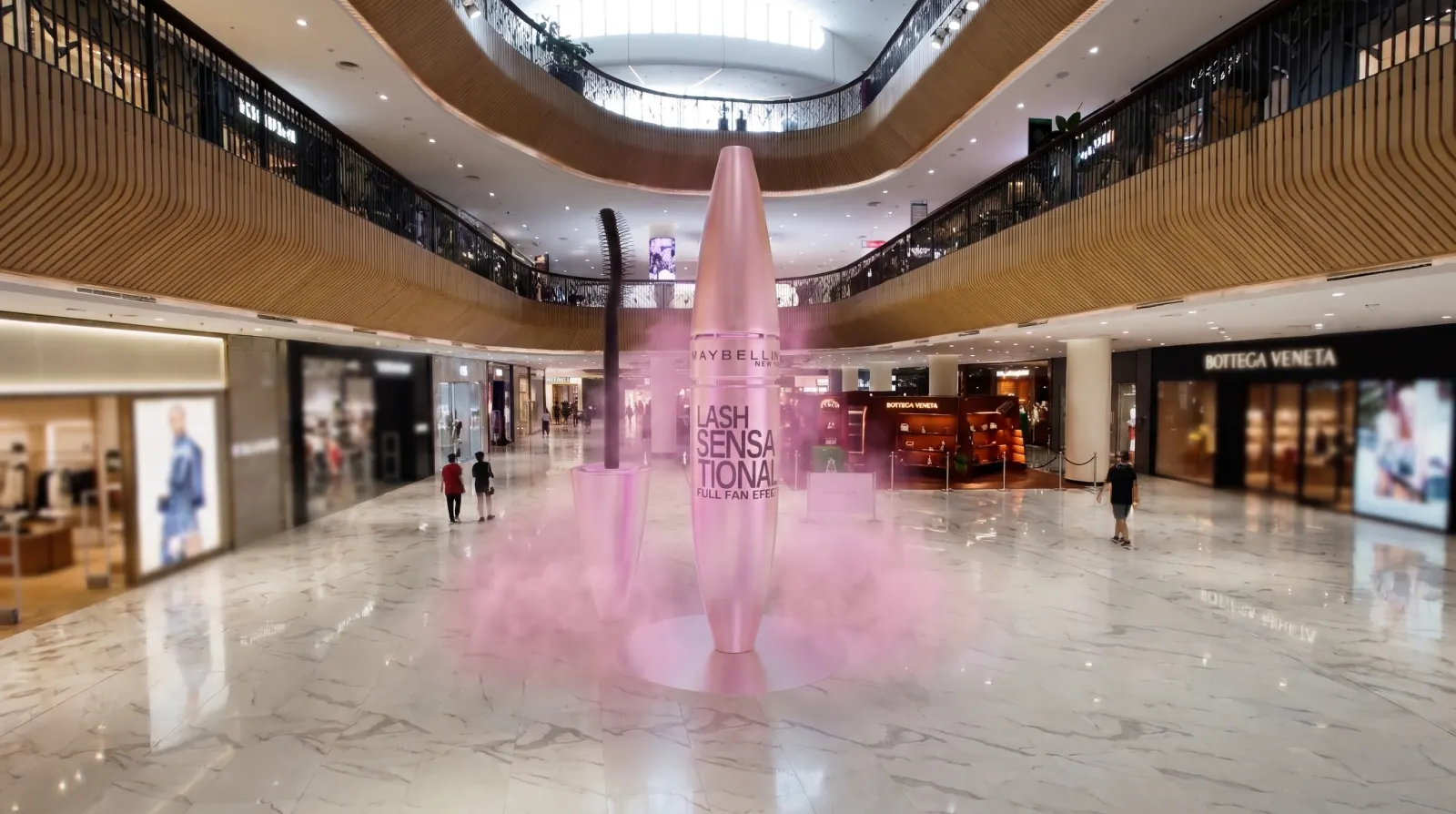
Yes, with mixed reality. A FOOH film places a giant product in a real street, mall or landmark, filmed as if it were there. In our self-initiated Maybelline Lash Sensational concept, a giant mascara rises in a mall in a pink cloud, made for vertical feeds. It is a concept, not a Maybelline commission, but it shows what the format can do for a launch. See our mixed reality work and read what FOOH is.
Should a cosmetics brand use AI for its ads?
For worlds, moods and fast variations, yes. For the product, the pack text and the exact shade, CGI is safer: generated images drift from shot to shot, and a beauty customer notices when a lipstick changes colour between two frames. Many beauty films mix both. Read what an AI commercial can and cannot do.
What does a CGI cosmetics ad cost, and how long does it take?
It depends on the length, the number of shots, the complexity of textures and worlds, and the formats. GN Motion publishes three starting prices:
- Launch Sprint: one vertical video and 5 feed stills, from $4,500.
- Launch Campaign: 3 videos with every launch format, from $9,500.
- Hero Film: one film with its own art direction, from $20,000.
A standard CGI film takes 1–3 weeks, a premium one 2–5 weeks, and AI video 3–7 days. See the pricing page for what each plan includes.
What should a beauty brand send before a CGI ad?
- The product, or the pack artwork and colour references if it isn't made yet.
- Samples or macro footage of each texture and shade.
- The approved claims, word for word, and any mandatory mentions.
- The markets where the ad runs, so the claims are checked for each.
- Your channels, formats and launch date.
With that, we propose concepts and a storyboard within 24 hours. See our work for beauty brands, our product animation service, book a call or send a brief from the contact page.