Guides7 min read
How do Black Friday ads stand out with CGI?
Black Friday advertising with CGI and AI: how brands stand out on Black Friday and 11.11, how late you can brief, which formats you need and what it costs.
Black Friday ads stand out when they show something the feed has not already seen that morning: the product in a world built for the campaign, a material that moves, a reveal that reads without sound. CGI and AI make that possible on a retail calendar, because the product never needs a set, a crew or finished stock.
Why do most Black Friday ads look the same?
Because they sell the same thing: a discount. In the last week of November almost every brand runs a red or black banner, a percentage and a countdown, on the same platforms, to the same people. The offer is rarely what makes someone stop. The image is.
That is the problem Black Friday advertising has to solve. The deal is a commodity; the creative is not. Three things separate the ads people remember from the ones they scroll past:
- A distinctive first second. On Reels, TikTok and Stories the viewer decides almost at once. A product that unfolds, a fabric that knits itself, a bottle in a world of liquid gold: something that could only be your brand.
- A visual the brand owns. A template with a price on it looks like every other template. A scene designed for your product is yours, and it can come back next year.
- Every placement covered. Black Friday runs on vertical video, feed posts, YouTube, email headers, the website banner and sometimes screens in store. One idea has to hold across all of them.
Why use CGI for Black Friday and 11.11 advertising?
CGI gives a seasonal campaign what a shoot struggles to give in a few weeks: control, variants and late changes.
- No product on set. A CGI film is built from the product's design files, photos or pack artwork. Samples stuck in a warehouse, a limited edition not yet manufactured or a festive pack still at the printer do not block the film.
- Variants from one build. Once the product and the scene exist in 3D, a new colourway, a gift set or a second product is a change in the file, not a new day of shooting. That is what a sales period needs: many posts, one look.
- Changes until late. The discount, the end card and the call to action sit on top of the film. If the offer changes the week before launch, the edit changes; the scene does not.
- Every format from the same scene. The camera is framed again for 9:16, 4:5, 1:1 and 16:9, then rendered for each, so the vertical cut is designed, not cropped.
- An asset that outlives the week. The same build gives stills for email and the website, and it can be relit for Christmas, January sales or next year's campaign. Read how one CGI asset feeds a whole campaign.
How did Café Kitsuné use CGI for Black Friday?
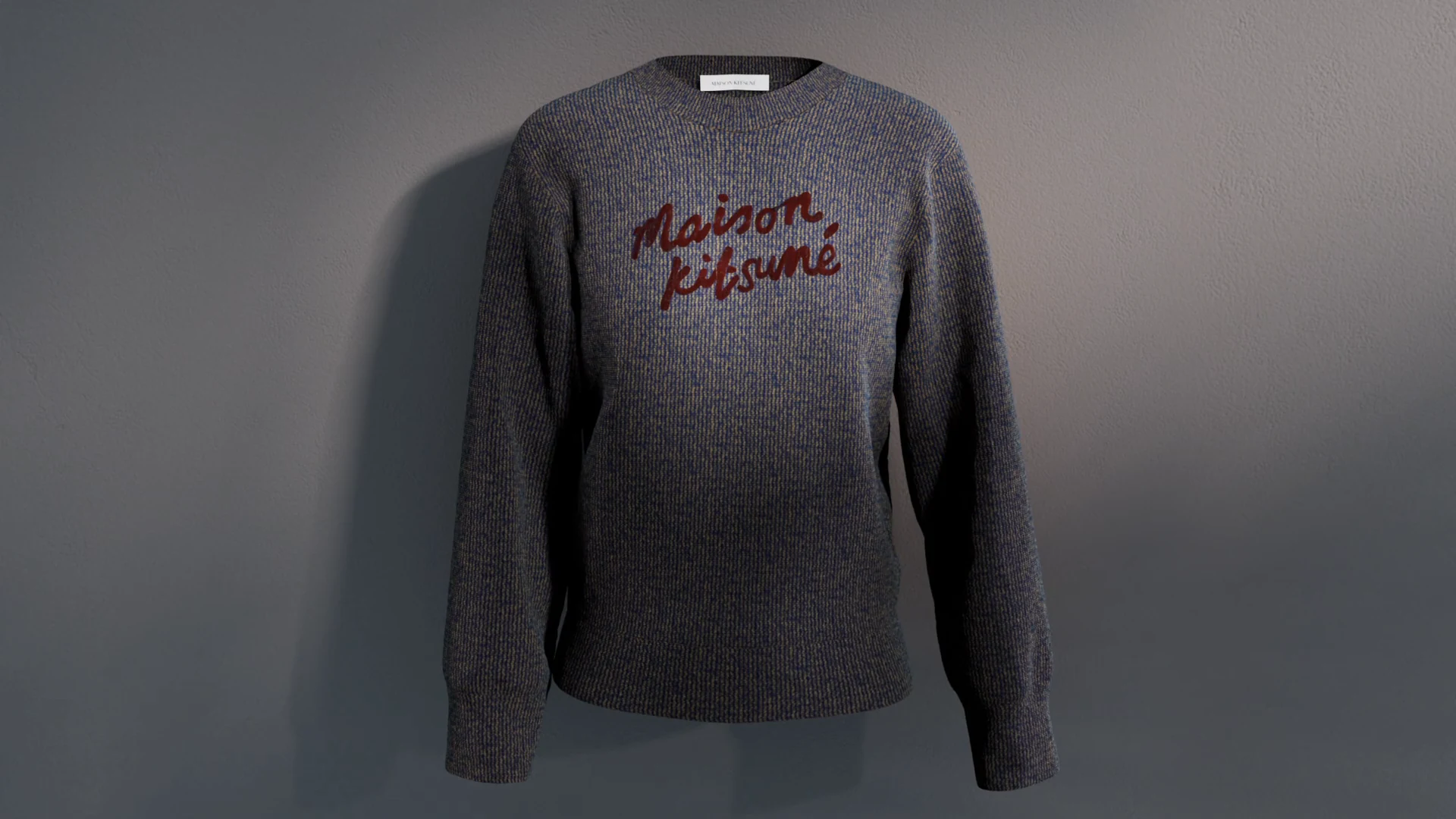
For its Black Friday campaign, GN Motion brought the Kitsuné logo to life with detailed fabric simulation: the logo knitted and stitched into garments, with variations in texture, colour and shirt design.
The production choice mattered for the season. A fabric simulation is built once and then varied: each texture or colourway is a new render of the same scene, so the campaign got several pieces with one identity instead of one hero image. It was delivered in 16:9 and 1:1, and it kept the brand recognisable in a week when every feed is crowded.
It was not a one-off. The Black Friday film is part of an ongoing collaboration: the same team also made a surreal launch film for Café Kitsuné's matcha and a series of logo animations. See every order on the Kitsuné client page. A brand that plans several sales moments a year can work the same way, with GN Motion as its in-house creative team on retainer.
What did L'Oréal's Double 11 film do differently?
It turned one sales moment into a series. For L'Oréal Double 11 we built three surreal CGI worlds, frozen glass, liquid gold and crystal, each revealing an L'Oréal product through its own material.
That structure suits a sales festival. 11.11, also called Double 11 or Singles' Day, and Black Friday both last longer than a day in practice: brands post before, during and after. Three worlds give three distinct posts that still read as one campaign, and each can be cut down for vertical feeds.
The same logic carries into the holidays. For Rabanne's Christmas campaign, gold forms and flows into a festive scene, true to the brand's gold, black and sparkling textures. A Black Friday scene built in CGI can lead straight into that kind of Christmas film.
How late can you brief a CGI Black Friday ad?
Later than most brands think, if the scope matches the time left. Work back from the day the ads go live, and keep room for your own approvals and for the ad platforms' review.
At GN Motion, the plans give these timings:
- Launch Sprint: one vertical video of up to 20 seconds and 5 feed stills, delivered 14 business days after storyboard approval, or 3 days with express delivery.
- Launch Campaign: 3 videos of 20 to 60 seconds, each in 16:9 and 9:16 with a 15-second ad cut, delivered in 21 days, or 7 days with express delivery.
- Hero Film: one film with its own art direction and cutdowns, delivered in 4–6 weeks. This is the one to brief early, before the autumn rush.
- AI video: 3–7 days, for worlds and variations around a product that does not need to match its real geometry in every frame.
Concepts come fast: the Sprint brings 2 concepts within 48 hours, the Campaign 3 within 24 hours. Slots are limited each month.
For reference, Black Friday 2026 falls on Friday 27 November, with Cyber Monday on 30 November. 11.11 is fixed on 11 November every year, so a brand running both campaigns should brief for 11.11 first and adapt the same scenes for Black Friday.
Which formats does a Black Friday campaign need?
Agree on every format before production starts: each one is framed in the scene, not cropped at the end.
- 9:16 vertical for Reels, TikTok, Stories and YouTube Shorts. This is where most Black Friday ads run, so it should be the master, not an afterthought.
- 4:5 and 1:1 for feed posts and carousel ads.
- 16:9 for YouTube, the website header and screens in store.
- Short ad cuts of a few seconds, for the first frames of a paid ad.
- Stills for email headers, banners and product pages, rendered from the same scenes.
The Launch Campaign covers 16:9, 9:16 and the ad cut for each video; the Hero Film comes in 3 formats with 15s and 6s cutdowns.
What does a CGI Black Friday ad cost?
It depends on the scope: the number of videos, their length, the number of shots, the materials and the formats. GN Motion publishes three starting prices:
- Launch Sprint: from $4,500.
- Launch Campaign: from $9,500, with every launch bonus included.
- Hero Film: from $20,000.
Express delivery adds $1,500 to a Sprint and $3,000 to a Campaign. Production starts once a concept is approved and 50% of the budget is confirmed, and on a launch plan, if the storyboard doesn't win you over, you get a full refund. See the pricing page, or read what drives the cost of a CGI product video.
Should you use AI, CGI or FOOH for a seasonal ad?
Choose by what the ad has to prove.
- The product must be exact: CGI. A pack, a logo or a garment that has to match the one in the shop is built as a 3D model.
- You need many variations quickly: AI, or a hybrid film where AI builds the world and CGI carries the product. Read what an AI commercial can and cannot do.
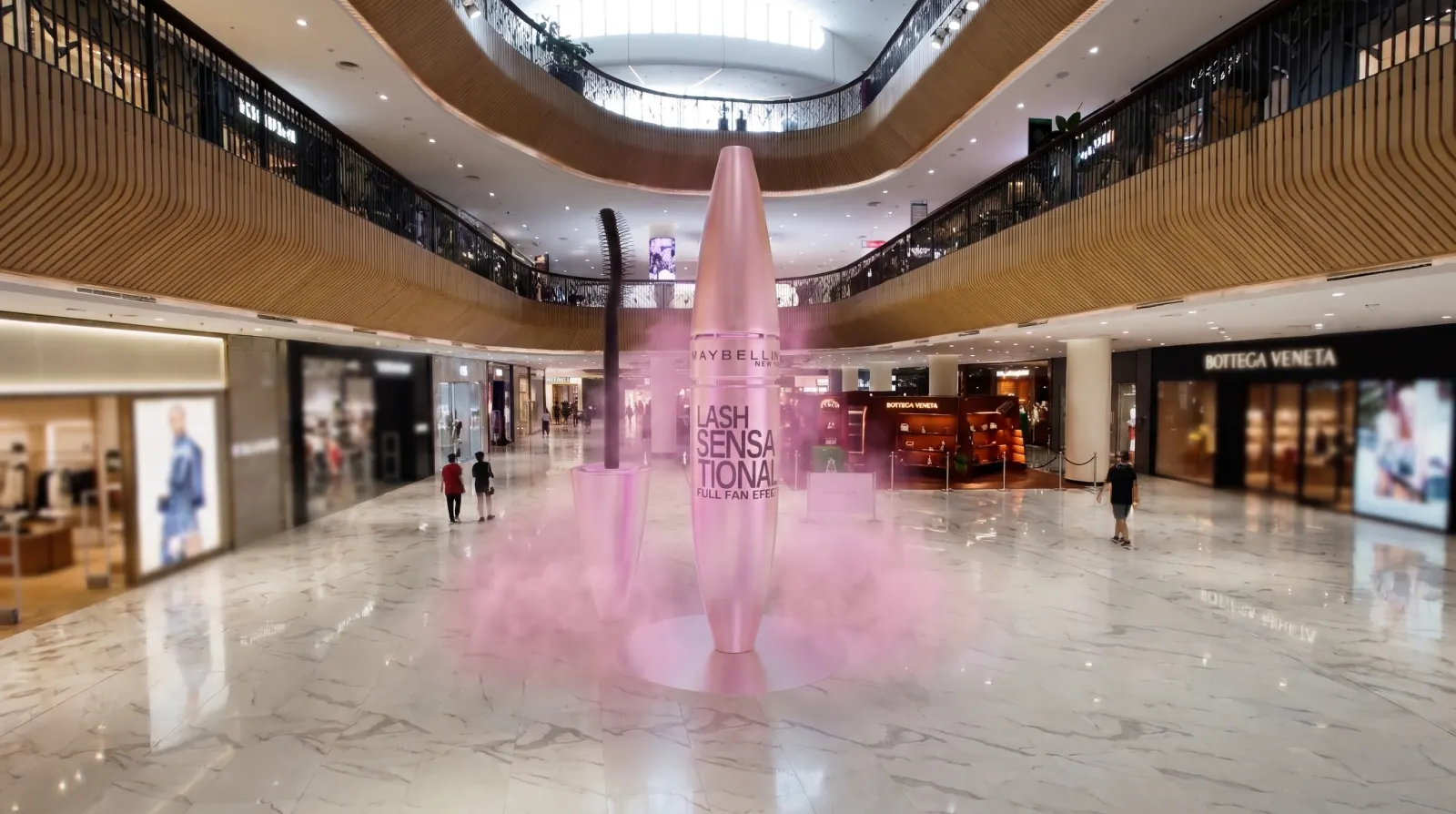
- You want the ad to feel like an event: a FOOH or mixed-reality film, where a giant product appears in a real street. Read what FOOH is before you brief one.
When is CGI the wrong choice for Black Friday?
When the message is about people. If the ad shows how a garment moves on real bodies or how a shade looks on real skin, a shoot is the honest choice, and CGI can carry the product shots around it. And if the budget only allows a price banner, a strong static design will beat a rushed film. Read the full comparison of CGI and photo shoots.
What should you send in a Black Friday brief?
- The product, or its design files, pack artwork and colour references.
- The offer and the dates each ad goes live, including 11.11 or Cyber Monday if they apply.
- Your channels and formats, paid and organic.
- Your brand guidelines and any past campaign the new one should follow.
- Who approves, and how long approvals take on your side.
Within 24 hours of a brief, GN Motion sends a tailored budget and concept ideas. Book a call, send your brief from the contact page, or see our CGI studio and work for fashion and beauty brands.