Explainers6 min read
What is an AI commercial, and when does it work?
AI commercials explained: what they are, how a studio produces one, what they cost, their limits, the rights questions to ask and when CGI is the better call.
An AI commercial is an advertising film whose images are made, wholly or partly, with generative AI instead of a camera or a full 3D build. It works for worlds, moods and fast variations. It struggles when the real product must look exactly like itself, which is why most brand-grade AI commercials are hybrids directed by artists.
What counts as an AI commercial?
The term covers three quite different films, and it helps to know which one you are buying.
- Fully generated. Every shot comes from image and video models, guided by prompts, reference images and edits. Fast and cheap to iterate, but the hardest to keep consistent from shot to shot.
- Hybrid. The product is built in CGI or filmed, and AI generates the world around it: settings, skies, crowds, textures, transitions. This is where most product brands land.
- AI-assisted. A classic CGI or live-action film where AI helps behind the scenes: mood boards, style frames, camera tests, clean-up. The finished film may contain no generated frame at all. Read how AI is used inside CGI production.
When people search for AI commercials they often mean the first kind, the ones that make the news. For a brand with a real product to sell, the second kind is usually the one that holds up.
How does a studio produce an AI commercial?
Like any commercial: concept first, tools second. At GN Motion the steps are the same as for a CGI film.
- Brief and concepts. The product, the audience, the channels and the launch date. We come back with concepts and a budget within 24 hours.
- Storyboard. Every shot is drawn and approved before generation starts, so the film is directed, not discovered.
- Look development. Style frames, casting and looks for the characters, the light and the palette, locked before the shots are made.
- Generation and build. AI generates the shots that allow freedom; the product is built in CGI or taken from real footage when it must be exact.
- Edit, sound and finishing. Artists select, correct and composite every frame, then add music and sound design.
- Three drafts. A black-and-white animatic, a low-resolution version with visuals, colour and sound, then the final film in every format you post.
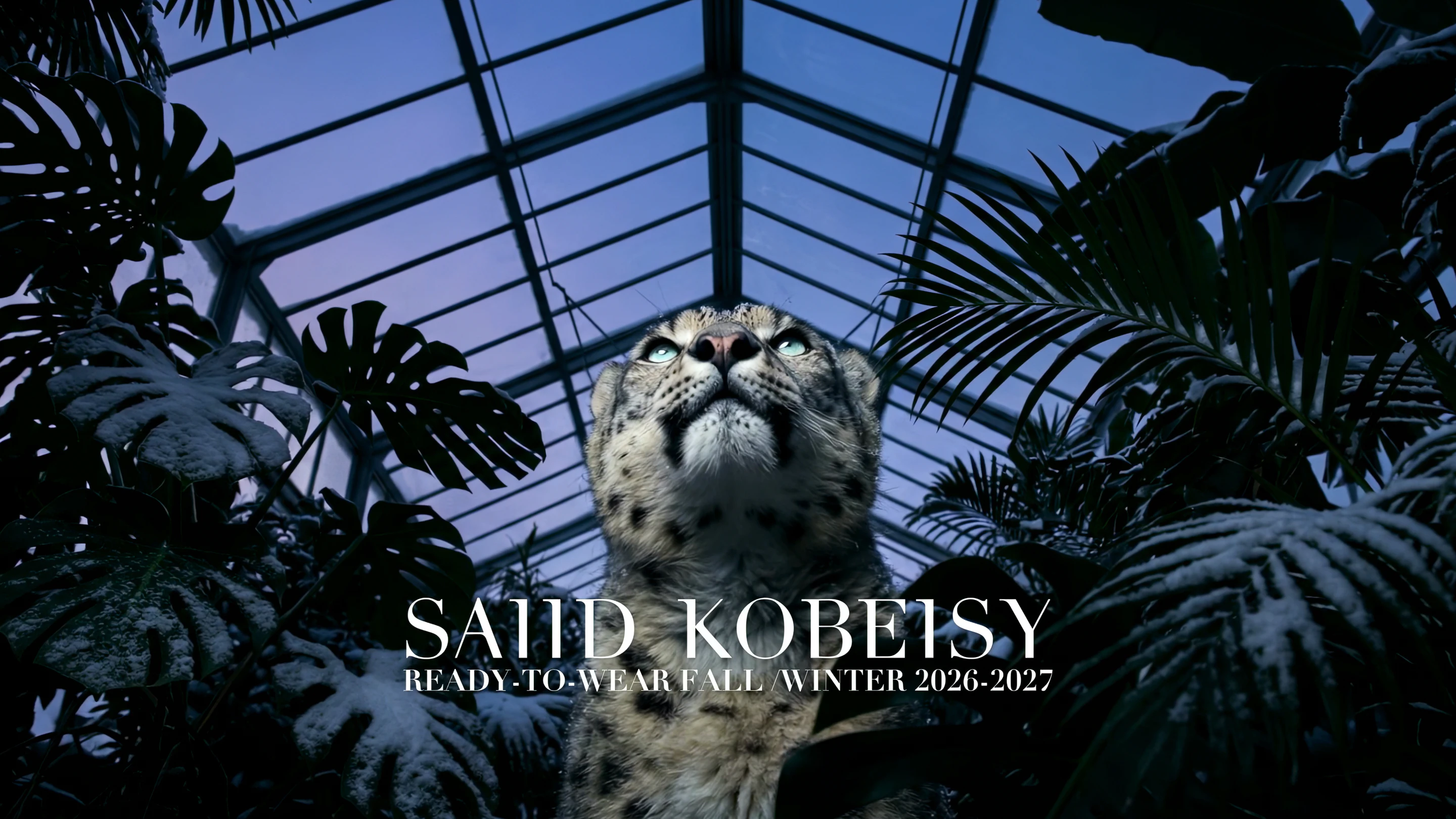
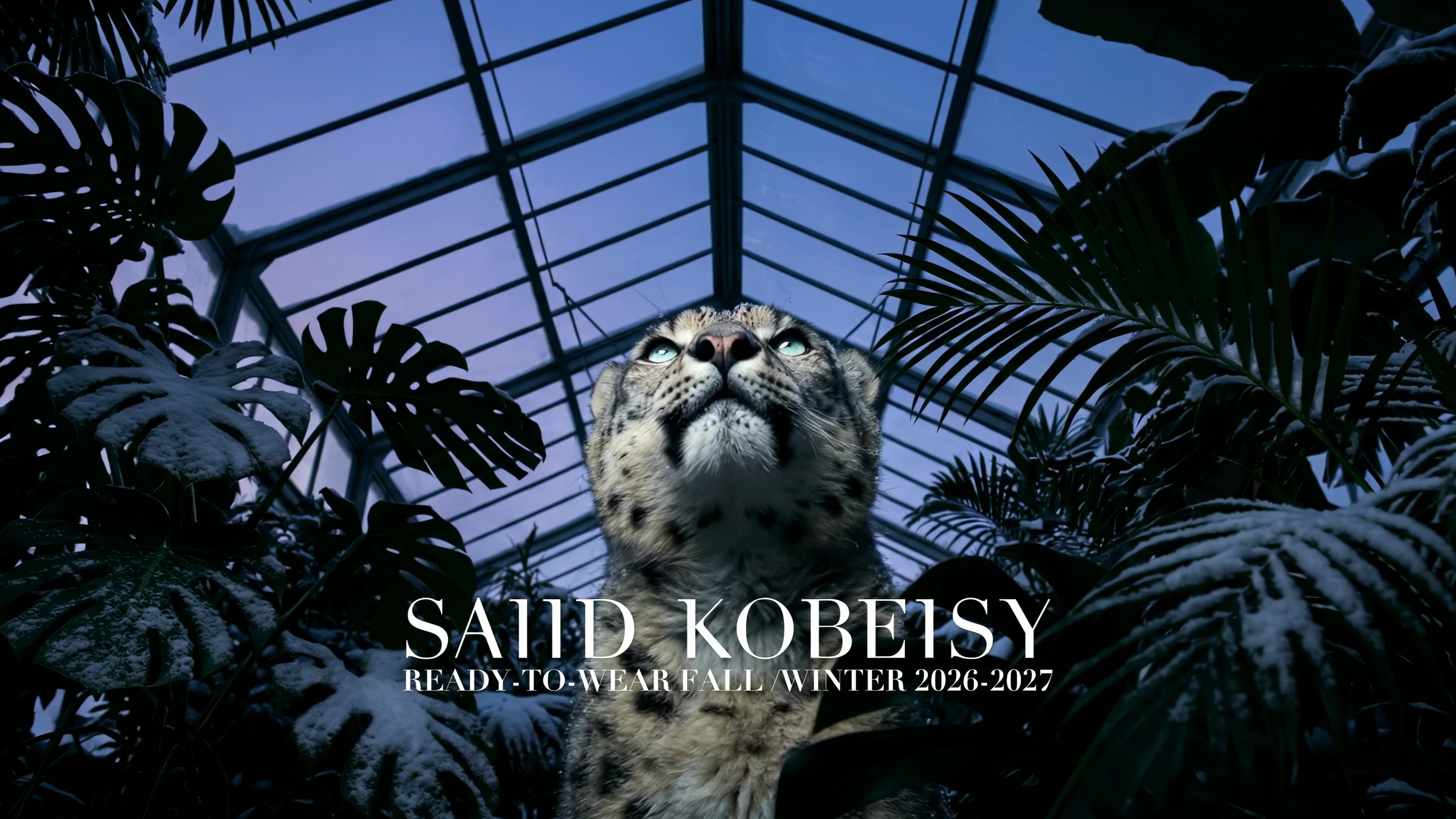
For Saiid Kobeisy's Fall Winter 2026 collection, a hybrid production, that meant a storyboard, casting and looks before any shot: couture and a snow leopard inside a snowbound glasshouse, built around one idea.
How fast is an AI commercial?
Faster than CGI, slower than a prompt. At GN Motion, AI video takes 3–7 days, a standard CGI film 1–3 weeks and a premium one 2–5 weeks.
The time goes into direction and checking, not into waiting for renders. A generated shot is quick; a generated shot that matches the storyboard, the brand's palette and the shot before it takes rounds of selection and correction. A studio that promises a finished commercial in an afternoon is describing a test, not a campaign.
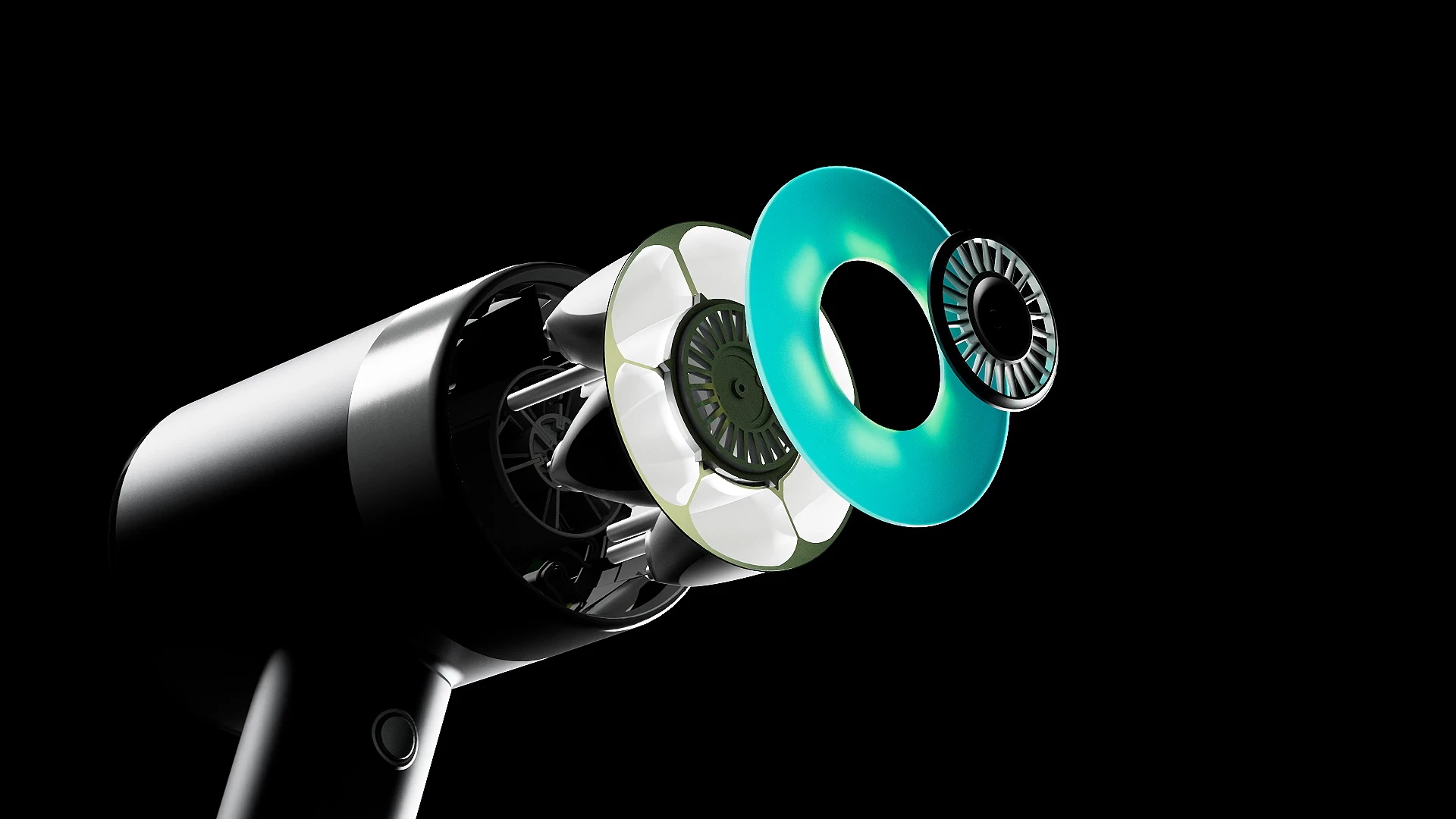
Lusso's launch film for its H2O Vitality purifier, a hybrid of AI and CGI, was made in two weeks: a single drop of water sets the product's formation in motion, the white purifier sharp against a bold, textured environment.
What does an AI commercial cost?
Less than a large shoot or a long CGI film, but not nothing: someone still writes, directs, edits, corrects and finishes it. GN Motion prices films by what you receive, not by how they are made:
- Launch Sprint: one vertical video with feed stills, from $4,500.
- Launch Campaign: 3 videos with every launch format, from $9,500.
- Hero Film: one film with its own art direction, from $20,000.
What moves the price is the same as for any film: length, number of shots, how much of the product must stay exact, and the formats. See the pricing page.
What are the limits of AI commercials?
They are real, and a good studio says so before you sign.
- Product accuracy. Generated images drift: proportions shift, logos and the text on a pack blur, a matte finish turns glossy. Fine for a mood, a problem for a product shot.
- Consistency. A face, a costume or a set has to stay the same across a film. Models are better at this than they were, but it still takes reference images, selection and correction.
- Camera control. AI gives you a move, rarely the exact one you planned. An orbit that ends on the logo or a macro push into a hinge is easier to build in 3D.
- Things it has never seen. AI generates from what it has learned. The inside of your product, an exploded view or a truly new shot has to be built.
- Hands, text and small details. Still the most common giveaways, and the first things a viewer notices.
What rights and legal questions should you ask?
AI commercials raise questions a classic film does not. None of this is legal advice; it is the list we would want a client's legal team to see.
- Which tools are used? Each model has its own terms on commercial use and ownership of outputs. Ask the studio to name them.
- What do you receive? The final film, the cut-downs, the project files, the CGI product model if one is built.
- Real people and likeness. Never generate a real person, a celebrity or a recognisable face without their consent and a contract. The same goes for voices.
- Trademarks and references. Prompts should not copy another brand's design, a film's style frame by frame, or a living artist's signature look.
- Music. Licensed or composed, never generated in imitation of a known track.
- Disclosure. Platforms and countries are writing rules on labelling AI-generated content. Check the rules for each platform and market where the ad runs.
When does CGI beat AI for a commercial?
Whenever the product itself is the message.
- The product must be exact in every frame: CGI builds it from design files, so it is the same in every shot and every format.
- You need an exploded view or a precise camera move: CGI. AI cannot invent the inside of a product it has never seen.
- The material is the story: liquid, fabric and glass behave physically in a simulation.
- You want assets for years: a 3D model gives stills, cut-downs and the next campaign.
Read the full decision guide, AI or CGI for a product film, for examples of each.
When is an AI commercial the right call?
- You need worlds and moods around the product, with more directions to choose from, earlier.
- Your launch date is close and the product can be built in CGI or filmed while AI handles the rest.
- You need many variations, for markets, audiences or ad tests.
- The idea is a concept, not a product demonstration.
Our self-initiated Garmin Forerunner concept shows the hybrid at work: rhythm and flow across environments, built to stop the scroll. For Atelier VM, another hybrid production, a deep blue flower opens slowly to reveal a jewel at its heart.
How do you start an AI commercial with GN Motion?
Send a brief with your product, audience, channels, launch date and any rules your brand has on AI. We reply within 24 hours with concepts and a budget, and production starts once a concept is approved and 50% is confirmed.
See our AI production and CGI studio pages, book a call or write to us from the contact page.