Guides4 min read
AI or CGI for a product film: what works?
Where AI helps a product film, where CGI still has to carry it, and how hybrid films use both without losing the real product.
CGI wins when the product must look exactly like itself, come apart in an exploded view, follow a precise camera move, or appear in a shot nobody has filmed before. AI works for worlds, moods and ideas around the product, and it is faster. Many GN Motion films mix both: AI for the setting, CGI for the product.
Where does AI work for a product film?
AI is strongest where nothing has to match a real object.
- Exploring directions. Moods, lighting tests and style frames, before a single 3D shot is built. A brand sees more options earlier.
- Worlds and atmospheres. Settings, skies, landscapes and textures around the product, where variety matters more than precision.
- Speed. At GN Motion, AI video takes 3–7 days, against 1–3 weeks for a standard CGI film.
For Saiid Kobeisy's Fall Winter 2026 collection, a hybrid production, every frame was built around one idea: couture and a snow leopard inside a snowbound glasshouse.
Where does CGI still win?
Wherever the product itself is the message.
- The exact product. CGI builds the product as a 3D model from its design files and references, so it stays the same in every shot and every format.
- Exploded views. The product comes apart piece by piece and back together, every part where the engineering puts it. For the Samsung Galaxy Z Fold7, the camera's lenses lift out of the phone one by one. AI cannot invent the inside of a product it has never seen.
- Complex, controlled camera moves. An orbit that ends on the logo, a macro push into a hinge, a match cut between two shots: in CGI the camera follows an exact path, frame by frame, and holds it across every format. AI gives you a move, rarely the one you planned.
- Impossible, abstract shots. AI generates from what it has already seen. A shot nobody has ever filmed, an abstract idea with no reference to learn from, has to be built: in CGI, anything you can design can be rendered.
- Materials and simulation. Liquid, fabric, glass and metal behave physically. For Cordura Comfort, a digital knitting simulation shows, step by step, how a jacket is built from the inside out.
- Reuse. The same 3D model gives you stills, cut-downs and the next film. Read how one CGI asset feeds a whole campaign.
Is an AI product video accurate to the real product?
Not reliably on its own. Generated images drift from one shot to the next: proportions shift, logos and the text on a pack blur, a finish turns from matte to gloss. In one image that can pass; across a film, viewers notice, and so does the brand.
The fix is not to avoid AI but to keep the product out of its hands. The product is built in CGI or taken from real footage, AI works on what surrounds it, and artists check every frame against the brand's references before delivery.
What does a hybrid film look like?
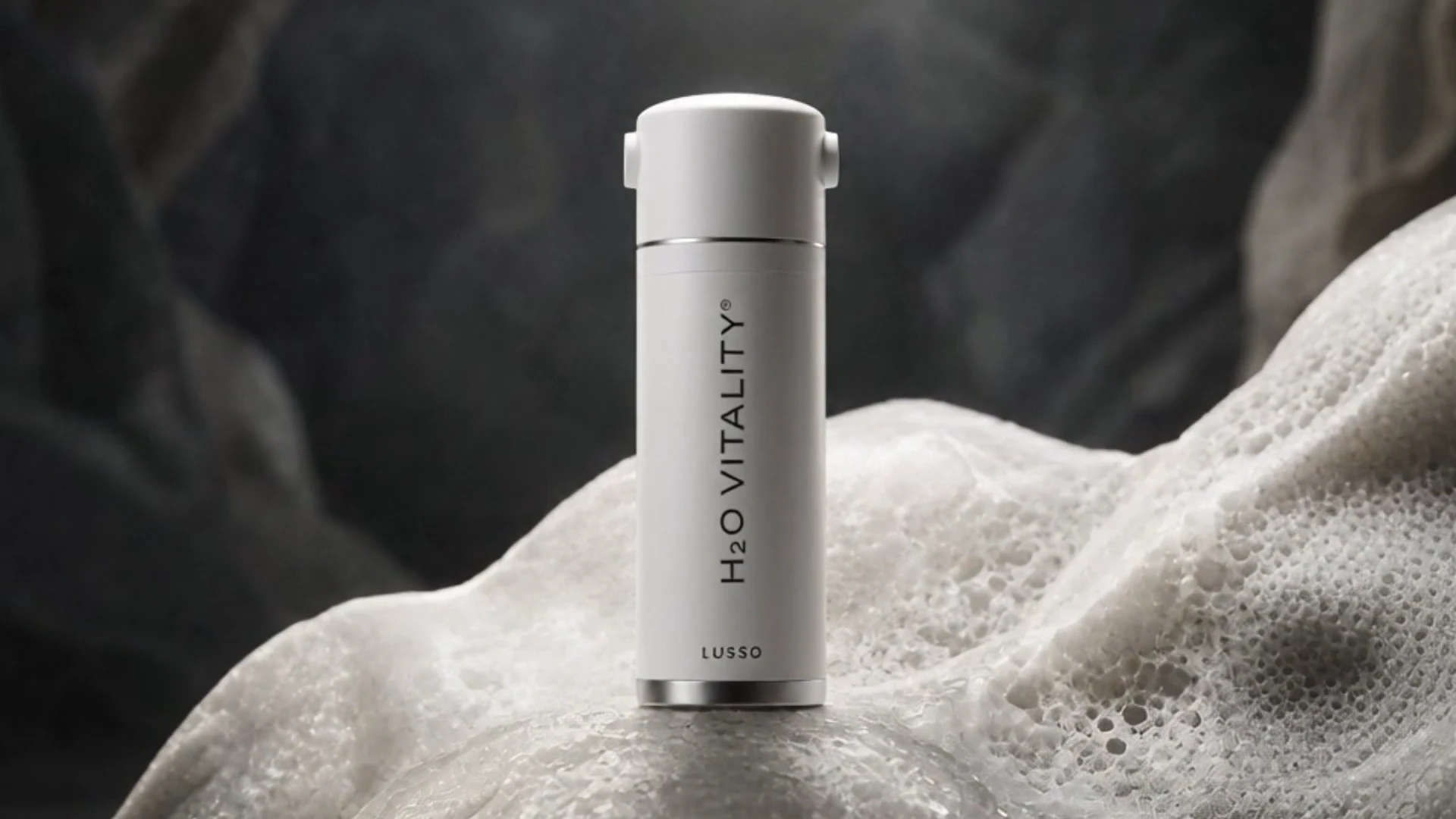
Lusso's launch film for its H2O Vitality purifier is a hybrid of AI and CGI, made in two weeks: a single drop of water sets the product's formation in motion, the white purifier sharp against a bold, textured environment.
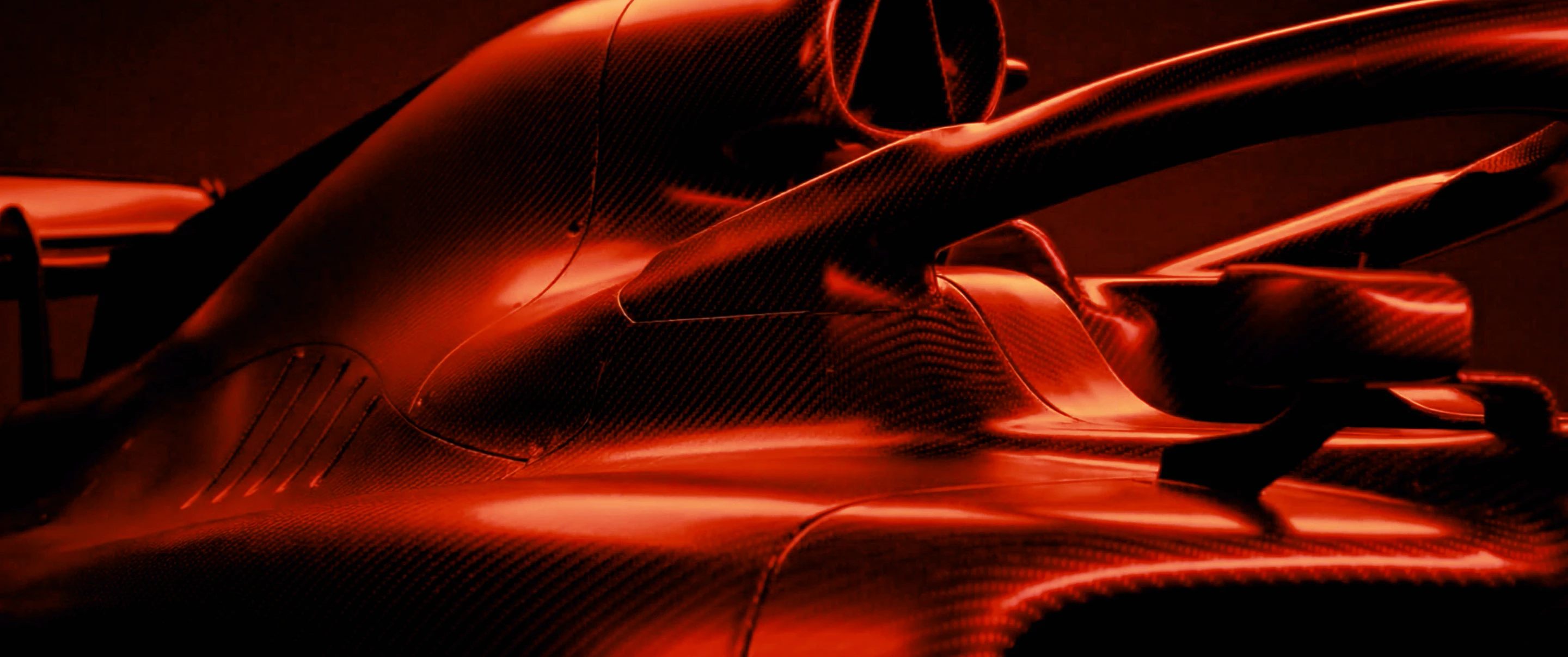
For our Formula 1 concept, another mixed production, Cinema 4D carries the precise, high-speed shots and AI generation widens the scenes around them: fiery red studio sequences and light trails burning across the frame, with no physical set or camera.
How do you choose between AI and CGI?
Start from what the film has to prove.
- The product must be exact in every frame: CGI for the product, whatever surrounds it.
- You need an exploded view, a planned camera move or a shot no one has filmed: CGI.
- You need many directions quickly, or a world around the product: AI for exploration and settings, in a hybrid film.
- Your launch date is close: AI video takes 3–7 days, a standard CGI film 1–3 weeks and a premium one 2–5 weeks.
- Your brand has rules on AI: ask the studio which tools it uses, where, and what files you receive.
Read how AI is used in CGI production and what an AI commercial is, see our AI production and CGI studio pages, or check what a CGI product video costs.