Guides3 min read
How much does a FOOH video cost?
Filmed plates or stock footage, shots, locations, cuts: what sets the price of a fake out of home video, and how to brief one.
A FOOH video's cost follows its scope: whether the plates are filmed for the campaign or licensed, how many shots and locations, how complex the product's animation and simulation are, and how many cuts and formats you need. At GN Motion, a FOOH is quoted from your brief, with a tailored budget within 24 hours.
What drives the price of a FOOH?
- Shots and locations. Each location needs its own plate, tracking, layout and lighting match. A series in three places is three shoots' worth of work, even with one idea.
- The plates. Footage filmed for the campaign costs a crew, a camera and sometimes permits. Licensed footage costs a licence. Either way, it has to be tracked.
- The product's movement. A product standing still is quicker than one that lands, opens, unfolds or drives. Smoke, cloth, water or a crowd reacting add simulation time.
- Interaction with the scene. People walking in front of the product, reflections in windows and shadows on moving traffic make the illusion stronger, and the compositing longer.
- Cuts and formats. Every format is framed and rendered: 9:16, 4:5 and 16:9 are three deliveries, not one.
Should you film the plates or use stock footage?
Film them when the place matters to the story or when the reveal depends on a specific camera move. You choose the location, the time of day and the move, and the plate is shot to be tracked cleanly.
Licensed stock footage works for a quick test or a generic city scene. It costs less to start, but you are limited to the moves, angles and light someone else filmed, and some clips are hard to track.
How many cuts do you need?
Plan the formats before the shot is designed, not after. A FOOH framed for vertical first is staged differently from a wide film cropped later.
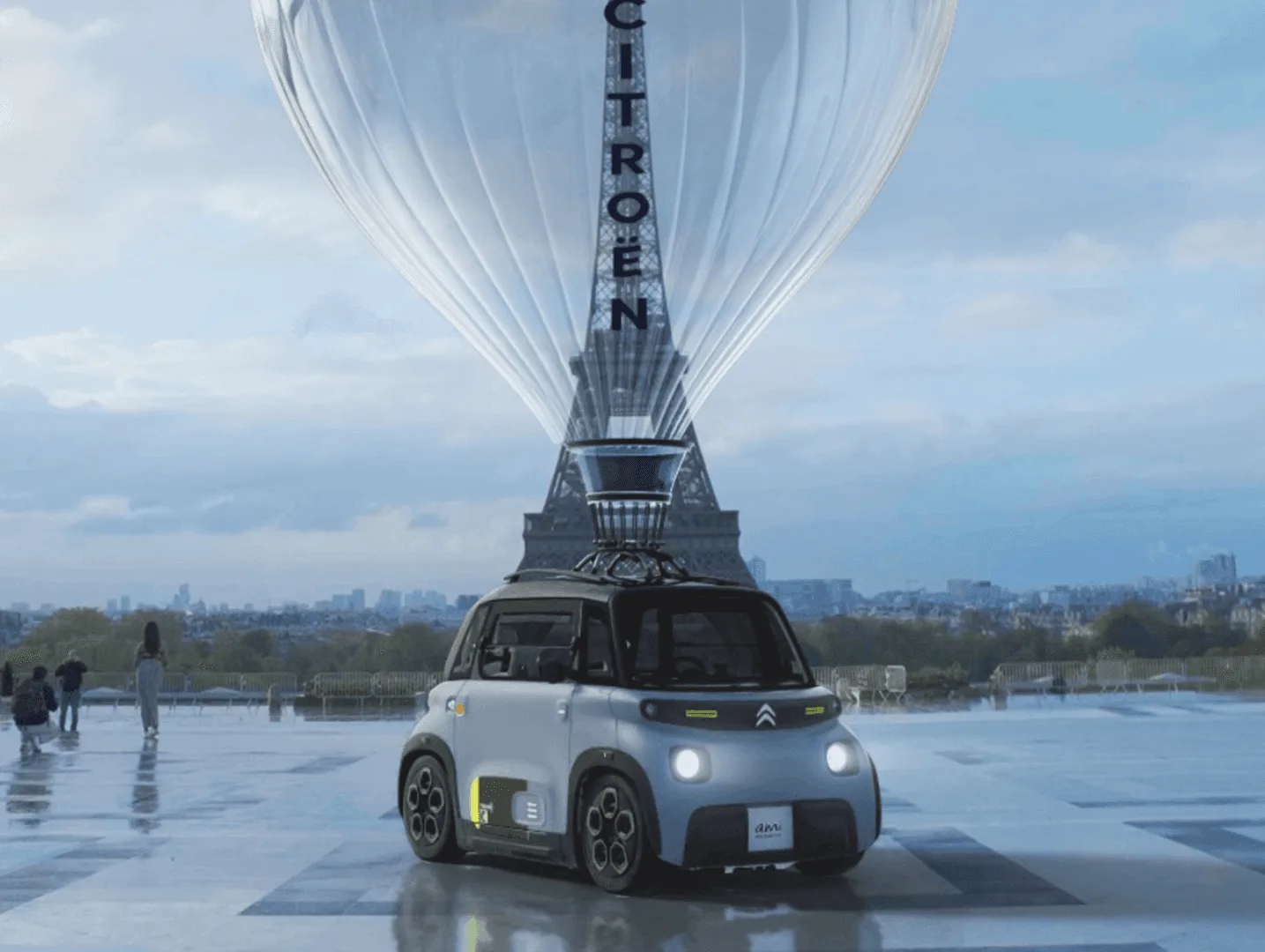
A series multiplies the work and the reach. For Citroën, we made three mixed reality films: the no-permit Ami dropped by balloon over Paris, Rome, the Sagrada Família and the Greek coast. The campaign brought strong engagement and visibility across Citroën's social media.
How long does a FOOH take?
At GN Motion, a FOOH follows the CGI timeline: 1–3 weeks for a standard film and 2–5 weeks for a premium one. Filmed plates add the shoot to the schedule, so book it early if your launch date is fixed.
How do GN Motion's launch plans compare?
For reference, GN Motion's launch plans start at $4,500 for the Launch Sprint and $9,500 for the Launch Campaign, as starting prices. Ask on a call whether your FOOH idea fits one of them or needs a custom quote; the pricing page lists what each plan includes.
To brief one, send the product, the places that matter to your brand, the formats you need and your launch date. Read what FOOH is and how it is made, or see our mixed reality and FOOH campaigns.